
Education
Can You Resize an Engagement Ring? Styles, Metals and What to Know
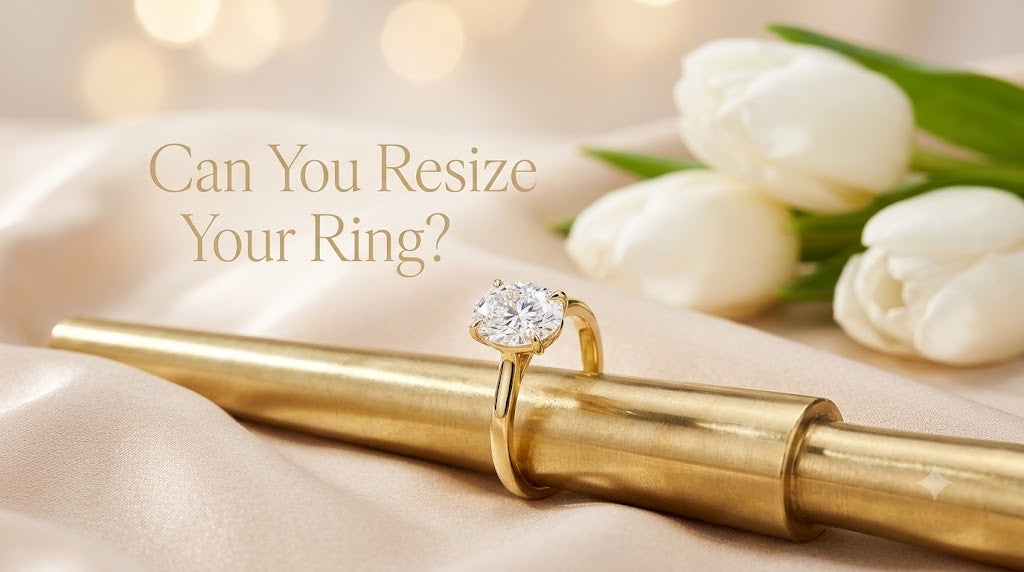
Ring sizes change. Fingers swell in summer, shrink in winter, and shift over the years with weight changes, pregnancy or simply age. Sometimes a ring was bought as a surprise and the guess was off by half a size. Whatever the reason, the good news is that most engagement rings can be resized. The less obvious news is that some styles resize easily, some only within a narrow range, and a few should not be resized at all. This guide explains how resizing works, which designs are friendly to it, and what to ask before you hand your ring to a jeweler.
How Engagement Ring Resizing Works
Resizing is done at the bottom of the shank, the part of the band that sits on the palm side of your finger. A jeweler works there because it is furthest from the center stone and usually has the simplest metal work.
Sizing down
To make a ring smaller, the jeweler cuts out a small section of metal, brings the two ends together and solders them closed. The seam is then filed, polished and, for white gold, re-plated with rhodium so it disappears.
Sizing up
For a small increase (about half a size), the band can sometimes be stretched on a mandrel. For anything larger, the jeweler cuts the shank and solders in a new piece of matching metal. Stretching is quicker but thins the band, so most quality workshops prefer adding metal.
How far can a ring go?
As a rule of thumb, most solid gold and platinum rings can be resized up or down by about two sizes without changing the look. Beyond that, the proportions of the setting start to shift: prongs can tilt, the head can look off-center, and the band may need rebuilding rather than resizing.
Which Ring Styles Resize Easily?
The simpler the shank, the easier the job. These designs are the most resizing-friendly:
- Plain-band solitaires. A smooth band with one center stone is the easiest ring to resize. Browse our moissanite solitaire engagement rings if you want maximum flexibility for the future.
- Bezel settings. The stone is held by a metal rim at the top, so work at the bottom of the shank does not disturb it. Our lab grown diamond bezel rings are a practical, low-maintenance choice.
- Three stone and halo rings with plain shanks. As long as the lower band has no stones, these behave much like a solitaire.
Styles That Need Extra Care
Pavé and micro pavé bands
Small stones set into the band can loosen when the metal is cut and reshaped. A skilled jeweler can resize pavé rings, especially when the stones stop partway down the shank, but expect a small range (usually up to one size) and a check of every stone afterwards.
Eternity and half eternity bands
Full eternity bands have stones all the way around, so there is no plain metal to cut. In most cases they cannot be resized and need to be remade in the new size. Half eternity bands are easier because the bottom half is plain metal. If you love the look of an eternity band, take extra time to confirm your size before ordering.
Tension, engraved and patterned shanks
Tension settings rely on the exact spring of the metal to hold the stone, so resizing can affect security. Engraving, milgrain and filigree on the lower band will be interrupted by a seam and may need to be re-cut by hand.
Two-tone and mixed-metal rings
A yellow gold band with a white gold head is usually fine. A band that alternates metals all the way around is harder, because the added section must match each color precisely.
Does the Metal Matter?
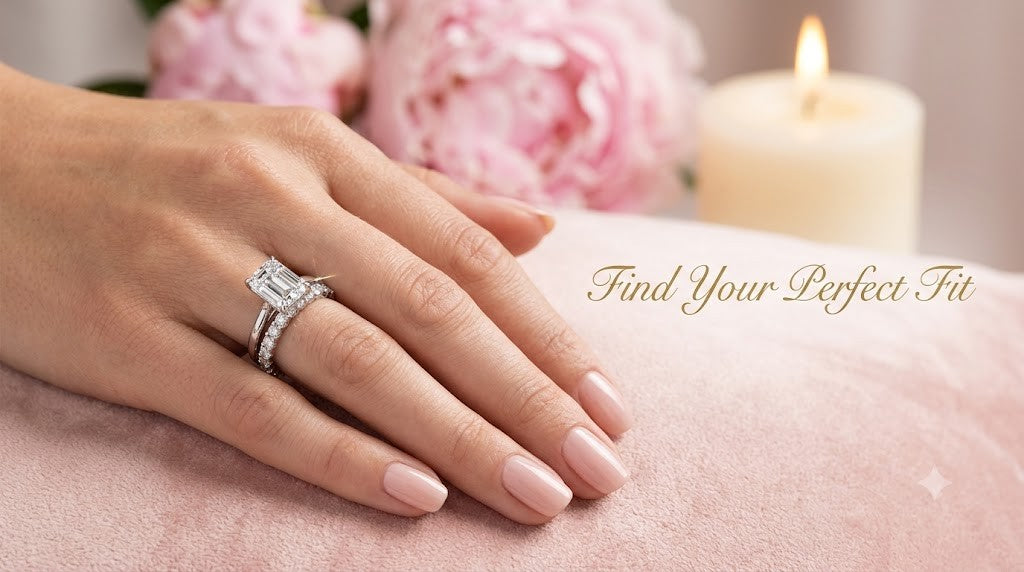
Yes. 14K and 18K gold are the easiest metals to resize and polish to a seamless finish. Platinum resizes beautifully but needs specialist equipment, so it often costs more and takes longer. Sterling silver can be resized but is softer and more prone to visible seams. Alternative metals such as tungsten, titanium and ceramic generally cannot be resized at all.
With white gold, remember that the rhodium plating will be refreshed after resizing. That is a bonus: your ring comes back looking new.
Is Resizing Safe for Moissanite and Lab Grown Diamonds?
Both stones are very tough. Lab grown diamonds share the hardness and heat tolerance of mined diamonds, and moissanite (9.25 on the Mohs scale) handles jeweler's heat better than most gemstones. A careful jeweler will still protect the stone or work far enough away that heat is not an issue, and will check the prongs before returning the ring. Softer stones you might pair with them, such as pearls, opals or emeralds, often need to be removed before soldering.
How to Avoid Resizing in the First Place
- Measure at the right time. Size your finger at the end of the day, at room temperature, not straight after exercise or a cold walk.
- Use a ring sizer, not string. Paper strips and string stretch and give inconsistent readings.
- Consider band width. Wider bands (over about 4mm) fit tighter, so you may need a quarter to half size up.
- Size for the knuckle. If your knuckle is larger than the base of your finger, choose the size that slides over it and ask about sizing beads to stop the ring spinning.
- Buying a surprise? Borrow a ring she wears on the same finger, or choose a plain-band style that is easy to adjust after the proposal.
What to Ask Your Jeweler Before Resizing
- How many sizes can this ring move without affecting the setting?
- Will you add metal or stretch the band?
- Will the stones be checked and prongs tightened afterwards?
- Is re-plating and polishing included?
- How long will it take, and is the ring insured while in your care?
When you are ready to choose a ring that will wear comfortably for decades, explore our full range of lab grown diamond engagement rings and moissanite designs, and reach out if you have sizing questions before you order.
Frequently Asked Questions
How much does it cost to resize an engagement ring?
Costs depend on the metal, the number of sizes and the design. A simple gold solitaire is usually the most affordable to resize, while platinum, pavé bands and large size changes cost more. Ask for a written quote before work begins.
How long does ring resizing take?
A straightforward resize often takes a few days to a week. Platinum, pavé and engraved rings can take longer because of extra stone checking and finishing.
Can a ring be resized more than once?
Yes, but each resize adds a seam and slightly stresses the metal. It is better to get the size right the first time than to resize repeatedly.
Will resizing weaken my ring?
Done properly, with added metal and a clean solder joint, resizing does not meaningfully weaken a ring. Stretching a band thin is what causes problems, which is why adding metal is preferred.
Can eternity bands be resized?
Full eternity bands usually cannot be resized because stones run all the way around. Half eternity bands can typically be adjusted by a small amount.
Shop the Look
-
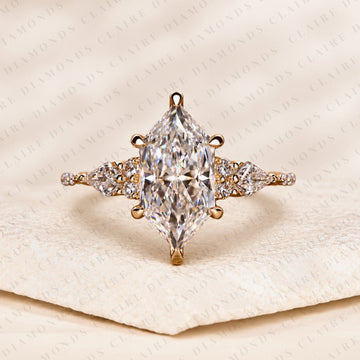 Dutch Marquise Cut Lab Grown Diamond Engagement Ring with Kite Cut Side Stones Luxury Wedding Ring for Women
From $ 1,473.00
Shop Now
-
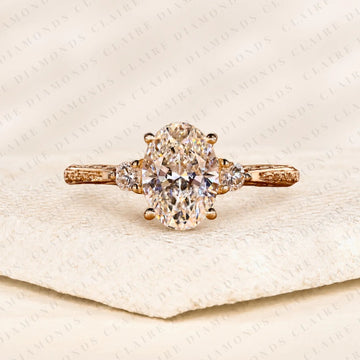 Oval Cut Lab Grown Diamond Ring Vintage Inspired Three Stone Engagement Ring with Side Diamonds Timeless Jewelry
From $ 1,458.00
Shop Now
-
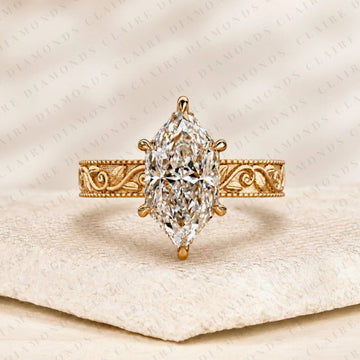 Dutch Marquise Cut Lab Grown Diamond Engagement Solitaire Ring Vintage Engraved Gold Band Filigree Wedding Ring Luxury Bridal Jewelry
From $ 1,317.00
Shop Now
-
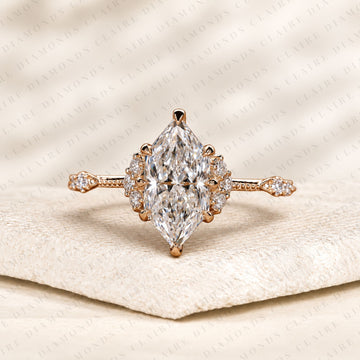 Dutch Marquise Cut Lab Grown Diamond Engagement Ring Rose Gold with Pavé Accents Vintage Inspired Luxury Wedding Ring for Women
From $ 1,373.00
Shop Now
-
 Oval Cut Moissanite Diamond Band Floral Pave Gold Engagement Ring Nature Inspired Wedding Elegant Luxury Jewelry for Women
From $ 248.00
Shop Now
-
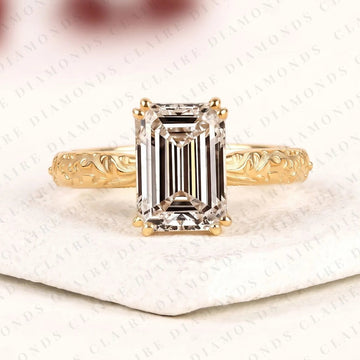 Emerald Cut Lab Grown Diamond Engagement Ring | Engraved Floral Gold Band with Pavé Accents | Vintage-Inspired Bridal Ring
From $ 1,397.00
Shop Now
-
Oval Cut Lab Grown Diamond Band Floral Pave Gold Engagement Ring Nature Inspired Wedding Elegant Luxury Jewelry for Women
From $ 1,402.00
Shop Now
-
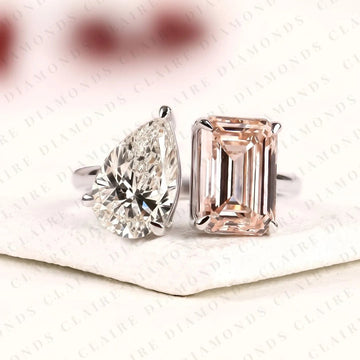 4.00 TCW Pear and Emerald Cut Toi et Moi Lab Grown Diamond Ring | Two-Stone Modern Gold Engagement Ring | Unique Luxury Bridal Jewelry
From $ 2,441.00
Shop Now
-
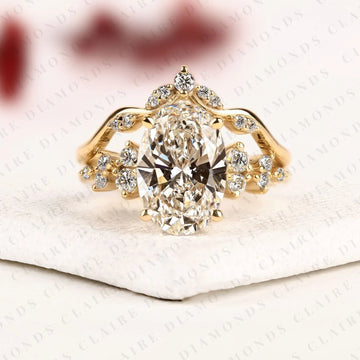 Oval Cut Lab Grown Diamond Engagement Ring Set Nature Inspired Wedding Ring with Floral Pave Accents Luxury Bridal Set Jewelry
From $ 1,422.00
Shop Now
-
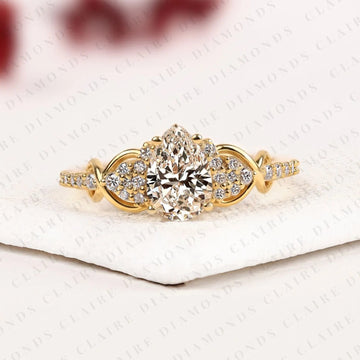 Pear Cut Lab Grown Diamond Engagement Ring Vintage Gold Halo Ring with Pave Side Stones Elegant Wedding Ring for Women
From $ 836.00
Shop Now
-
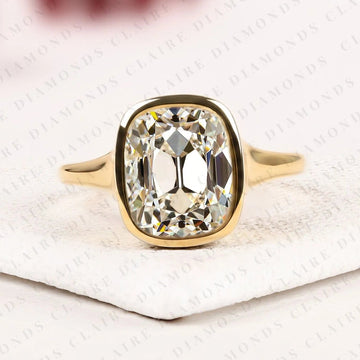 Old Mine Elongated Cushion Cut Lab Grown Diamond Engagement Ring Bezel Set Gold Solitaire Minimalist Vintage Wedding Ring for Women
From $ 1,343.00
Shop Now
-
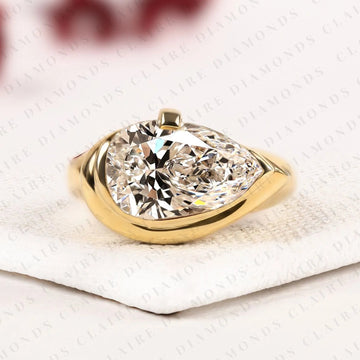 East West Pear Cut Lab Grown Diamond Engagement Ring Bezel Set Gold Solitaire Wedding Ring Unique Anniversary Jewelry
From $ 1,910.00
Shop Now
-
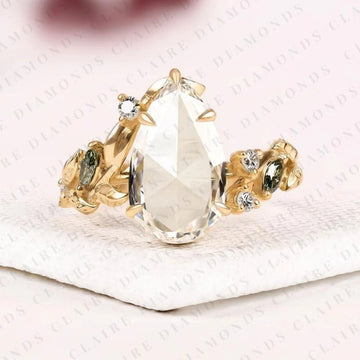 Pear Rose Cut Lab Grown Diamond Engagement Ring Green Marquise Side Stones Botanical Leaf Vine Gold Vintage Wedding Ring
From $ 1,385.00
Shop Now
-
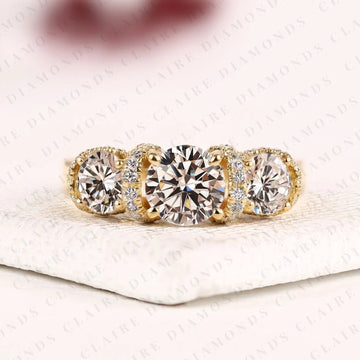 Round Cut Lab Grown Diamond Engagement Ring Three Stone Gold Ring with Diamond Accents Luxury Wedding Ring for Women
From $ 1,485.00
Shop Now
-
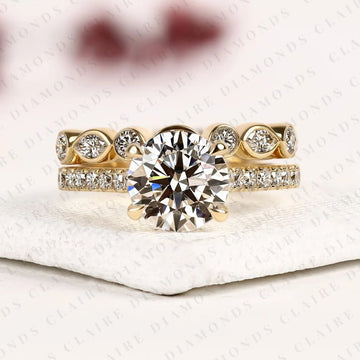 Round Cut Lab Grown Diamond Engagement Ring Set | Yellow Gold Bezel Accent Wedding Band | Modern Two-Tone Bridal Ring Set
From $ 1,549.00
Shop Now

