
Engagement Rings
Bypass Engagement Rings: Stone Shapes, Settings and Buying Tips

A bypass engagement ring does something a classic solitaire never does: instead of meeting in a closed circle beneath the center stone, the two ends of the band slide past each other and wrap around the stone from opposite sides. The result is a ring with natural movement, a soft sense of embrace, and a silhouette that looks modern and romantic at the same time. If you have been scrolling past endless round solitaires and want something with a little more personality, a bypass ring is well worth a closer look.
This guide explains how bypass rings are built, which stone shapes suit them best, how to choose a metal and setting, and what to know about sizing and pairing a wedding band.
What Is a Bypass Engagement Ring?
In a bypass design, the band is split so its two ends overlap rather than join. One end rises along one side of the center stone and the other end rises along the opposite side, creating a gentle S-curve or swirl across the top of the finger. The stone sits in the gap where the two ends pass each other.
The style has roots in early twentieth-century jewelry, when wrap and crossover rings symbolized two lives coming together. Today, bypass rings are popular with couples who want that same meaning in a cleaner, contemporary form.
Bypass vs. Crossover vs. Twisted Band
- Bypass: the band ends glide past the stone without touching, framing it in an open wrap.
- Crossover: the band strands physically cross over each other, often forming an X beneath or beside the stone.
- Twisted band: two strands spiral around each other along the whole shank, like a rope, with the stone set on top.
All three share a sense of movement, but the bypass is the most open and airy of the group.
Best Stone Shapes for a Bypass Ring
Because the band wraps diagonally, a bypass ring rewards shapes that have direction or a strong outline.
Pear
The pear is the classic bypass partner. Its rounded end nests into one curve of the band and its point follows the other, so the whole ring reads as one flowing line. Our bypass pear moissanite engagement ring with a half bezel is a good example of how the band and stone move together.
Radiant and Emerald
Step-cut and rectangular shapes create a striking contrast between straight lines and curved metal. A radiant gives you more sparkle, while an emerald gives you a calm, glassy look. See the organic half-bezel radiant lab grown bypass ring for a sculptural take on this pairing.
Oval and Marquise
Elongated shapes can be set slightly diagonally to follow the swirl of the band, which makes the finger look longer and slimmer.
Round
A round stone works too, especially if you want the band itself to be the main design feature. It produces a balanced, symmetrical look with a modern twist.
Settings That Work Well
- Prong setting: lets the most light into the stone for maximum sparkle. Four or six prongs are typical; pear shapes should always have a V-prong protecting the point.
- Half bezel: wraps metal around two sides of the stone, which echoes the wrap of the band and adds protection for active hands.
- Accent stones: pavé or small side stones on one or both band ends add extra shimmer and make the swirl more visible from across the room.
If you work with your hands a lot, a half bezel or low-set prong head will snag less on sweaters and gloves.
Choosing the Metal
The metal matters more on a bypass ring than on a plain solitaire, because so much of the design is the band itself.
- Yellow gold highlights the curves and gives the ring a warm, vintage-inspired glow.
- White gold lets the stone take center stage and gives a crisp, modern finish.
- Rose gold softens the look and flatters warmer skin tones.
For everyday wear, 14K gold is a popular balance of durability and rich color. Sterling silver is a budget-friendly option for a promise ring or a travel ring but will need more frequent polishing.

Moissanite or Lab Grown Diamond?
Both stones are excellent choices for a bypass ring. Moissanite is extremely hard (9.25 on the Mohs scale) and shows strong rainbow fire, which looks lively against a curving band. Lab grown diamonds are chemically identical to mined diamonds, rate a 10 on the Mohs scale, and offer a crisper white sparkle. The choice usually comes down to the look you prefer and your budget; moissanite typically lets you go larger for the same spend.
Sizing and Comfort Tips
Because the two band ends sit side by side on top of the finger, a bypass ring can feel slightly wider than a single-shank ring. Keep these points in mind:
- If the top of the ring is wide, consider going up a quarter size for comfort, especially in warm weather.
- Comfort-fit (rounded inside) bands make the overlap feel smoother.
- Bypass rings can be resized, but intricate engraving or pavé on the shank may limit how far, so it is best to measure carefully before ordering.
Pairing a Wedding Band with a Bypass Ring
A straight band often leaves a gap next to a bypass ring because of the swirl. Most people choose one of these options:
- Curved or contour band: follows the outline of the bypass so the two rings sit flush. Browse our curved moissanite wedding bands for shapes that nest neatly.
- Thin straight band with a gap: some brides love the small space, as it shows off the shape of the engagement ring.
- Wear on separate hands: an easy solution if you prefer a wide eternity band.
You can also explore the full range of moissanite wedding bands to find a width and style that balances your ring.
Who Should Choose a Bypass Ring?
A bypass ring suits someone who loves meaningful symbolism, wants a design that feels different without being loud, and appreciates jewelry that looks like a small sculpture. It is also a smart choice for petite or slender fingers, since the diagonal line adds visual length.
Frequently Asked Questions
What does a bypass ring symbolize?
The two band ends passing each other represent two people coming together and continuing side by side, which is why bypass rings have long been used as engagement and promise rings.
Can a bypass ring be worn every day?
Yes. Choose a secure setting such as a half bezel or protected prongs, a durable stone like moissanite or lab grown diamond, and a solid gold band for the best long-term wear.
Do bypass rings need a special wedding band?
Not necessarily, but a curved or contour band will sit flush against most bypass designs. A thin straight band works if you are happy with a small gap.
Which stone shape looks best in a bypass setting?
Pear is the most popular because it naturally follows the curve of the band, but radiant, oval, marquise, and round shapes all look beautiful in bypass designs.
Can bypass rings be resized?
Most can be resized by about one size up or down. Rings with heavy engraving or pavé along the band may be more limited, so confirm your size before ordering.
Final Thoughts
A bypass engagement ring gives you movement, meaning, and a silhouette that stands out from a sea of traditional solitaires. Start with a stone shape you love, choose a metal that complements your skin tone, and plan your wedding band early so the two rings sit together beautifully for years to come.
Shop the Look
-
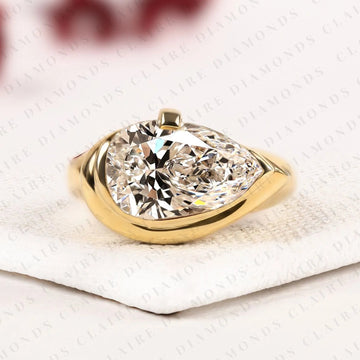 East West Pear Cut Lab Grown Diamond Engagement Ring Bezel Set Gold Solitaire Wedding Ring Unique Anniversary Jewelry
From $ 1,910.00
Shop Now
-
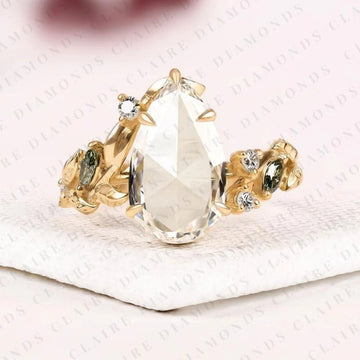 Pear Rose Cut Lab Grown Diamond Engagement Ring Green Marquise Side Stones Botanical Leaf Vine Gold Vintage Wedding Ring
From $ 1,385.00
Shop Now
-
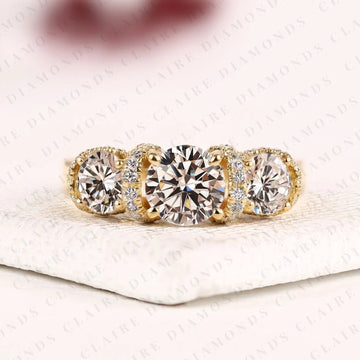 Round Cut Lab Grown Diamond Engagement Ring Three Stone Gold Ring with Diamond Accents Luxury Wedding Ring for Women
From $ 1,485.00
Shop Now
-
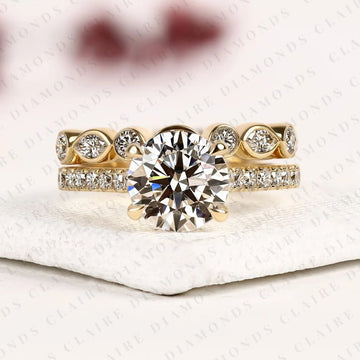 Round Cut Lab Grown Diamond Engagement Ring Set | Yellow Gold Bezel Accent Wedding Band | Modern Two-Tone Bridal Ring Set
From $ 1,549.00
Shop Now
-
 Oval Cut Lab Grown Diamond Engagement Ring Set | Yellow Gold Pavé Wedding Band | Two-Tone Bridal Ring Set
From $ 1,882.00
Shop Now
-
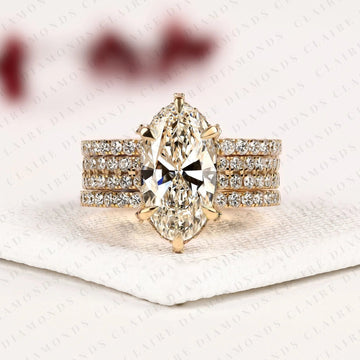 Oval Cut Lab Grown Diamond Hidden Halo Ring Multi Row Pave Gold Band Luxury Bridal Set Wedding Ring for Women
From $ 2,825.00
Shop Now
-
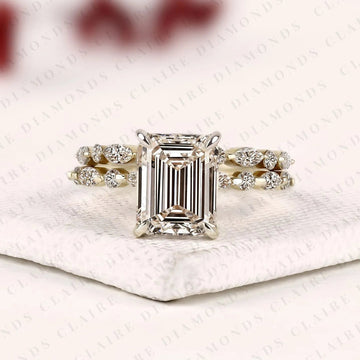 Emerald Cut Lab Grown Diamond Engagement Ring Bridal Set Ring with Pavé Diamond Band Modern Unique Bridal Jewelry
From $ 1,588.00
Shop Now
-
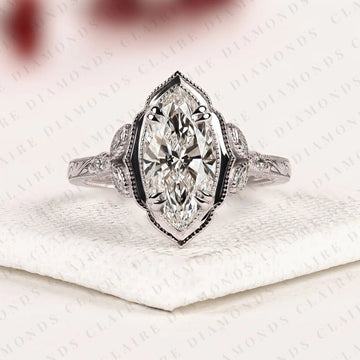 Marquise Cut Lab Grown Diamond Engagement Ring | Vintage Inspired Milgrain Bezel & Engraved White Gold Ring | Floral Diamond Accent Bridal Ring
From $ 1,407.00
Shop Now
-
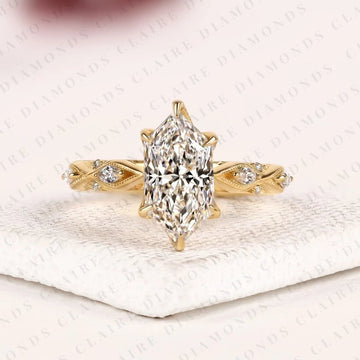 Dutch Marquise Cut Lab Grown Diamond Engagement Ring Leaf Vine Band Nature Inspired Unique Bridal Ring Luxury Wedding Jewelry
From $ 933.00
Shop Now
-
 Marquise Cut Lab Grown Diamond Engagement Ring | Floral Inspired Diamond Side Stone Ring | Yellow Gold Bridal Ring | Elegant Nature Inspired Wedding Jewelry
From $ 1,633.00
Shop Now
-
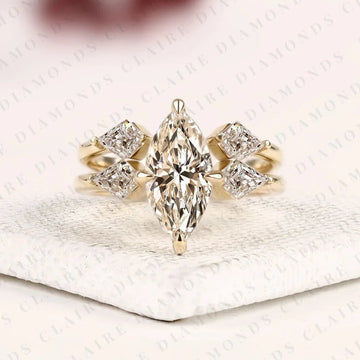 Marquise Cut Lab Grown Diamond Engagement Ring Bridal Set with Kite Cut Three Stone Ring Modern Unique Bridal Jewelry
From $ 1,588.00
Shop Now
-
 Oval Cut Lab Grown Diamond Engagement Ring | Floral Cluster Side Stone Ring | Yellow Gold Nature Inspired Bridal Jewelry | Elegant Statement Wedding Ring
From $ 1,492.00
Shop Now
-
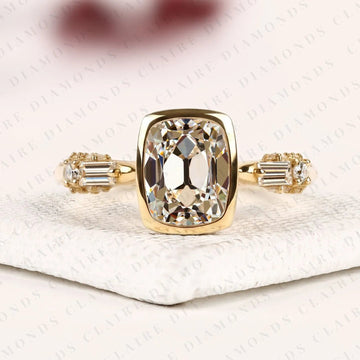 Old Mine Elongated Cushion Cut Lab Grown Diamond Engagement Ring Yellow Gold Bezel Ring with Baguette Side Stone Modern Luxury Bridal Jewelry
From $ 1,554.00
Shop Now
-
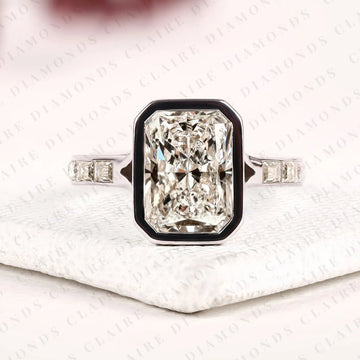 Radiant Cut Lab Grown Diamond Bezel Set Engagement Ring with Baguette Pave Set White Gold Modern Luxury Bridal Jewelry
From $ 1,505.00
Shop Now
-
 Radiant Cut Lab Grown Diamond Three Stone Engagement Ring | Pear Cut Side Stone Gold Ring | Beaded Bezel Statement Bridal Jewelry | Modern Luxury Wedding Ring
From $ 1,468.00
Shop Now


