
Engagement Rings
Pear Engagement Rings: How to Choose Shape, Setting and Stone
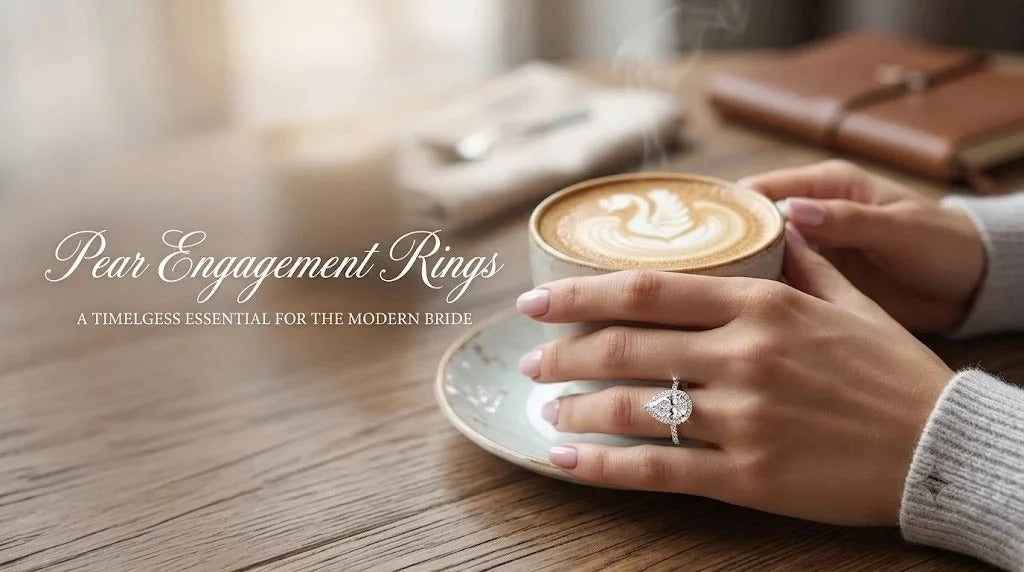
A pear engagement ring pairs the soft curve of a round stone with the slender point of a marquise, giving you a teardrop silhouette that flatters the hand and looks larger than its carat weight. The best pear ring has a balanced shape, minimal bow-tie shadow, a protected tip and a setting that suits your daily life. Here's how to choose one with confidence.
What is a pear shaped engagement ring?
A pear cut (also called a teardrop) is a brilliant-style cut with one rounded end and one pointed end. Because it uses brilliant faceting, it returns a lot of sparkle, and because it is elongated, it creates a lengthening effect on the finger.
Pear rings feel romantic and a little unexpected. They sit between the classic look of a round solitaire and the drama of a marquise, which is why they work for both minimalist and vintage-inspired styles.

Why shoppers choose a pear cut
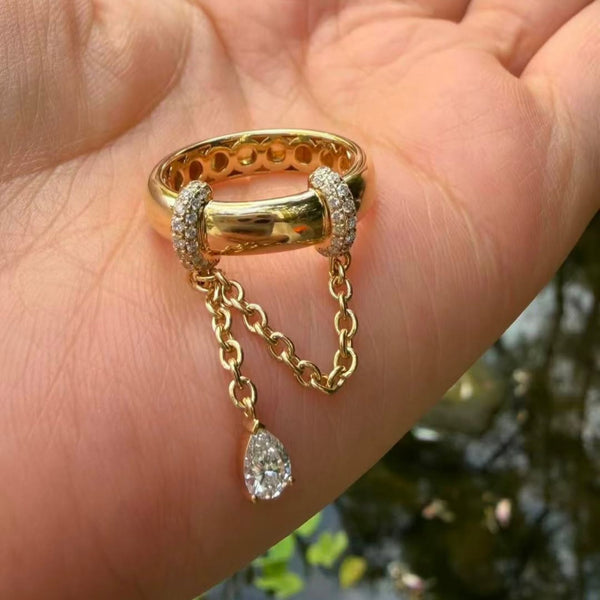
- Looks bigger per carat: the elongated outline spreads the stone's surface area along the finger, so it often appears larger than a round stone of the same weight.
- Slims the finger: the tapering shape draws the eye lengthwise, a flattering effect for shorter or wider fingers.
- Distinctive but timeless: it stands out from round and oval rings without feeling like a passing trend.
- Versatile direction: you can wear it point-up, point-down or even tilted east-west for a modern twist.
How to choose the right pear shape
No two pear stones look exactly alike, so it pays to look closely at the outline before you buy.
1. Length-to-width ratio
The ratio controls how slim or full the teardrop looks. Many buyers prefer a ratio of roughly 1.5 to 1.75, which reads as a classic, graceful pear. A lower ratio looks fuller and rounder; a higher ratio looks long and slender. Neither is wrong; choose the outline you love on your hand.
2. Symmetry and shoulders
Look for a point that lines up with the center of the rounded end and "shoulders" (the upper curves) that are even on both sides. Shoulders that are too flat make the stone look narrow, while shoulders that bulge can look clumsy.
3. The bow-tie effect
Most elongated brilliant shapes, including pears, show a darker band across the middle called a bow-tie. A light, subtle bow-tie is normal and adds contrast. A heavy, dark one steals sparkle. Viewing the stone on video or in person is the best way to judge it.
4. Color and clarity
The pointed tip can show a touch more color than the rest of the stone, so if you love a bright white look, choose a higher color grade. For clarity, focus on whether the stone looks clean to the naked eye rather than chasing the top grade.
Best settings for pear engagement rings
The tip of a pear is its most delicate point, so the setting should protect it. Popular options include:
- Solitaire with a V-prong: a V-shaped prong cradles the point and keeps the look clean and classic.
- Hidden halo: a row of small stones under the center adds sparkle from the side without changing the top view.
- Halo: a full halo follows the teardrop outline, adds size and protects the edges.
- Bezel or half bezel: a metal rim around the stone offers the most protection, ideal for active hands.
- Vintage cluster and Art Deco: small accent stones around a pear center create an heirloom, nature-inspired look.
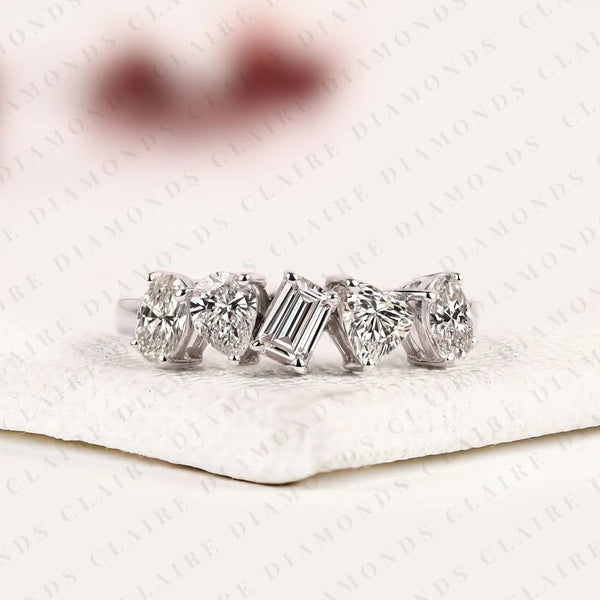
- Toi et moi: a pear paired with a second shape, such as an emerald or oval, for a two-stone "you and me" design.
Browse our pear lab grown diamond engagement rings to compare these settings side by side, or see bezel engagement rings if protection is a priority.
Point up or point down?
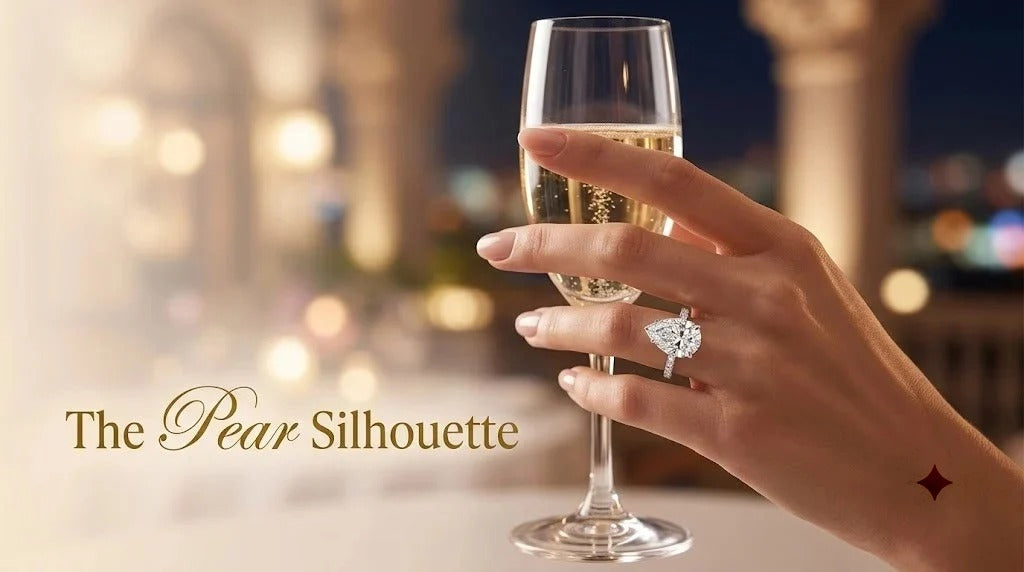
The traditional way to wear a pear engagement ring is with the point facing toward the fingertips. This orientation enhances the slimming effect and is how most pear rings are set. Wearing the point toward the wrist is a personal style choice, and some people simply prefer how it looks. If you are buying as a surprise, point-toward-fingertips is the safe choice.
Lab grown diamond or moissanite pear ring?
Both are excellent choices for a pear center stone, and the right one depends on your priorities.
- Lab grown diamond: chemically and physically the same as a mined diamond, with diamond's classic brilliance. Ask about IGI certification for center stones.
- Moissanite: a durable gemstone with fiery, rainbow-flashing sparkle at a lower price point, which makes a larger pear stone more attainable.
Not sure which suits you? Read Is Moissanite a Real Diamond?, then explore our pear moissanite engagement rings.
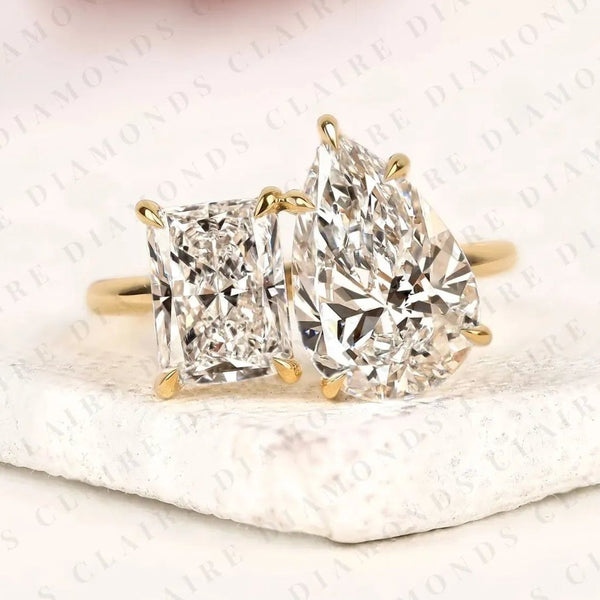


Tips for buying a pear engagement ring online
- Decide on your center stone type (lab grown diamond or moissanite) and your budget.
- Choose a ratio and outline you like by comparing several pear photos and videos.
- Pick a setting that protects the tip and fits your lifestyle.
- Select your metal: yellow gold warms the stone, while white gold keeps it icy.
- Confirm the ring size. If it's a surprise, see our tips in How to Choose the Right Ring Size.
- Check the policies: every Claire Diamonds ring is handcrafted to order and ships free and insured within the US, with 30-day returns.
Shop pear engagement rings


Love elongated shapes but still deciding? Compare with our oval engagement ring buyer's guide.
Frequently asked questions
Which way should a pear engagement ring face?
Traditionally, the point faces toward the fingertips, which lengthens the look of the finger. Wearing it point-toward-the-wrist is a valid personal preference.
Do pear shaped diamonds look bigger?
Often, yes. Because the pear is elongated, it typically shows more surface area from the top than a round stone of the same carat weight.
Are pear engagement rings durable for everyday wear?
Yes, as long as the pointed tip is protected. A V-prong, halo or bezel setting guards the point against chips during daily wear.
What wedding band goes with a pear engagement ring?
A curved or contoured band nests neatly against the teardrop, while a straight band works if the setting sits high enough. A matching bridal set takes the guesswork out of pairing.
Ready to find your teardrop? Shop pear lab grown diamond engagement rings, handcrafted to order with free insured US shipping and 30-day returns.
Shop the Look
-
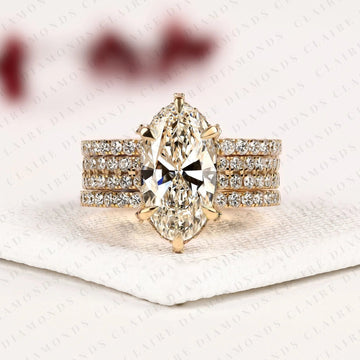 Oval Cut Lab Grown Diamond Hidden Halo Ring Multi Row Pave Gold Band Luxury Bridal Set Wedding Ring for Women
From $ 2,825.00
Shop Now
-
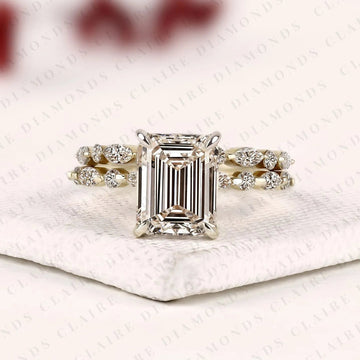 Emerald Cut Lab Grown Diamond Engagement Ring Bridal Set Ring with Pavé Diamond Band Modern Unique Bridal Jewelry
From $ 1,588.00
Shop Now
-
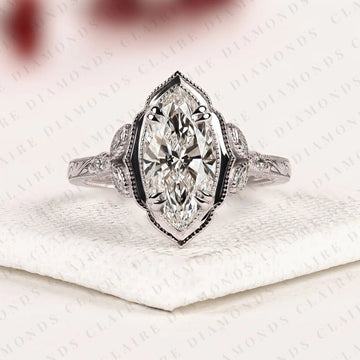 Marquise Cut Lab Grown Diamond Engagement Ring | Vintage Inspired Milgrain Bezel & Engraved White Gold Ring | Floral Diamond Accent Bridal Ring
From $ 1,407.00
Shop Now
-
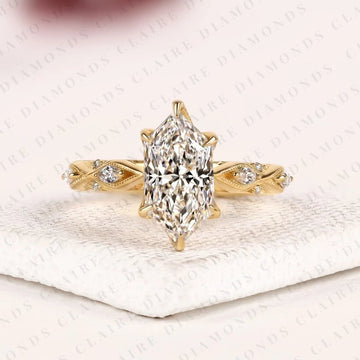 Dutch Marquise Cut Lab Grown Diamond Engagement Ring Leaf Vine Band Nature Inspired Unique Bridal Ring Luxury Wedding Jewelry
From $ 933.00
Shop Now
-
 Marquise Cut Lab Grown Diamond Engagement Ring | Floral Inspired Diamond Side Stone Ring | Yellow Gold Bridal Ring | Elegant Nature Inspired Wedding Jewelry
From $ 1,633.00
Shop Now
-
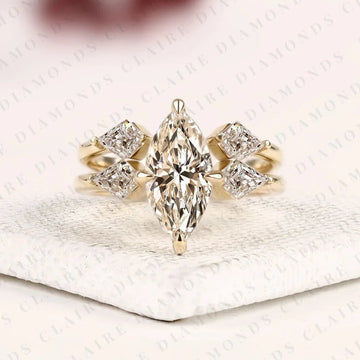 Marquise Cut Lab Grown Diamond Engagement Ring Bridal Set with Kite Cut Three Stone Ring Modern Unique Bridal Jewelry
From $ 1,588.00
Shop Now
-
 Oval Cut Lab Grown Diamond Engagement Ring | Floral Cluster Side Stone Ring | Yellow Gold Nature Inspired Bridal Jewelry | Elegant Statement Wedding Ring
From $ 1,492.00
Shop Now
-
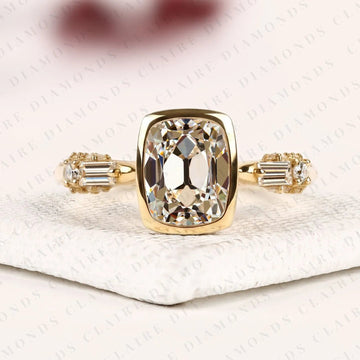 Old Mine Elongated Cushion Cut Lab Grown Diamond Engagement Ring Yellow Gold Bezel Ring with Baguette Side Stone Modern Luxury Bridal Jewelry
From $ 1,554.00
Shop Now
-
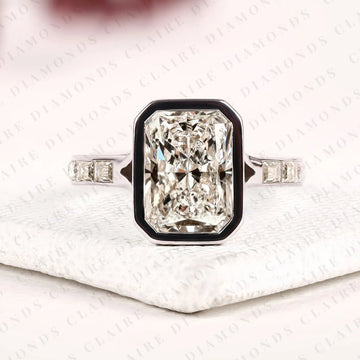 Radiant Cut Lab Grown Diamond Bezel Set Engagement Ring with Baguette Pave Set White Gold Modern Luxury Bridal Jewelry
From $ 1,505.00
Shop Now
-
 Radiant Cut Lab Grown Diamond Three Stone Engagement Ring | Pear Cut Side Stone Gold Ring | Beaded Bezel Statement Bridal Jewelry | Modern Luxury Wedding Ring
From $ 1,468.00
Shop Now
-
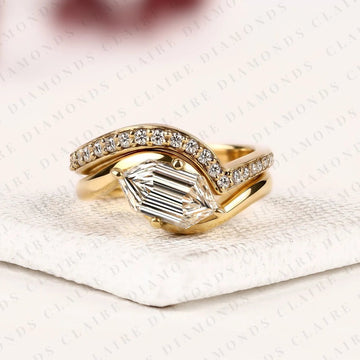 East-West Hexagon Cut Lab Grown Diamond Engagement Ring | Yellow Gold Bypass Pavé Band | Geometric Modern Bridal Ring Set | Unique Statement Jewelry
From $ 873.00
Shop Now
-
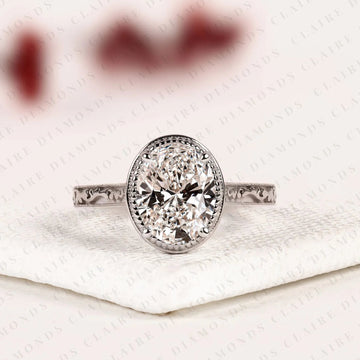 Oval Cut Lab Grown Diamond Engagement Ring Vintage Milgrain Bezel Setting White Gold Engraved Band Elegant Solitaire Bridal Jewelry
From $ 744.00
Shop Now
-
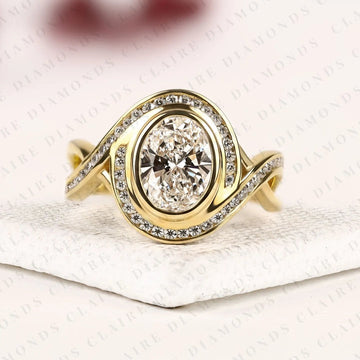 Oval Cut Lab Grown Diamond Engagement Ring | Pavé Bezel Halo Yellow Gold Bypass Ring | Twisted Split Shank Bridal Jewelry | Modern Statement Ring
From $ 939.00
Shop Now
-
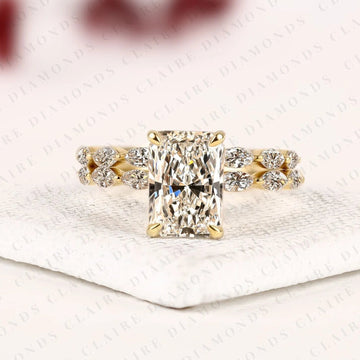 Radiant Cut Lab Grown Diamond Engagement Ring Set Yellow Gold Double Band with Pavé Side Stones Unique Luxury Bridal Ring Set
From $ 1,766.00
Shop Now
-
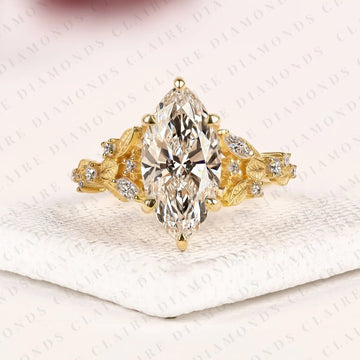 Marquise Cut Lab Grown Diamond Engagement Ring, Floral Leaf Vine Gold Ring, Nature Inspired Bridal Ring, Unique Vintage Wedding Jewelry
From $ 1,407.00
Shop Now


