Education
Can You Shower, Sleep or Swim in Lab Diamond and Moissanite Jewelry? An Everyday Wear Guide
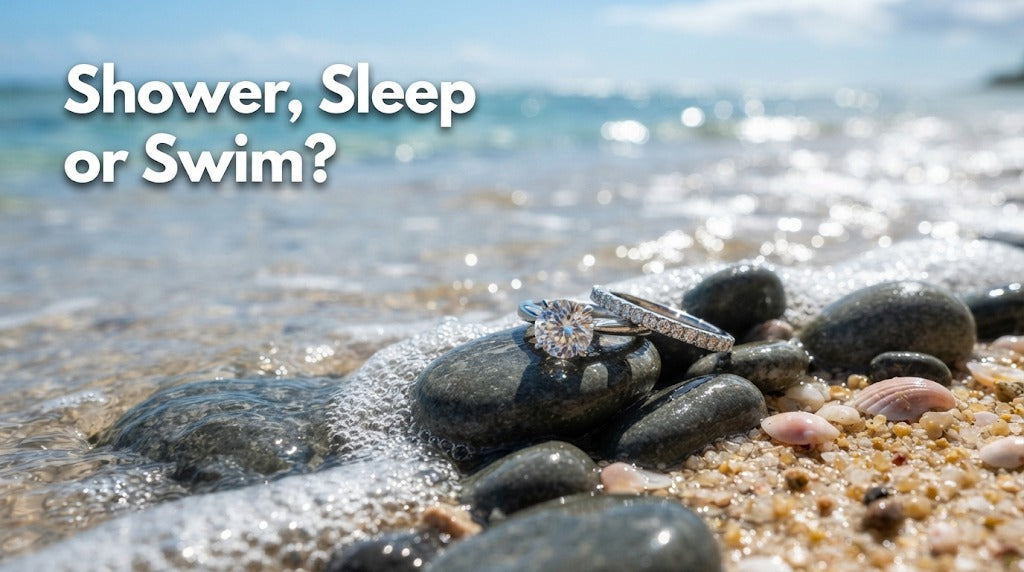
One of the best things about lab grown diamond and moissanite jewelry is that it is made to be worn, not kept in a box. Both stones are among the hardest gems in the world, so it is natural to wonder whether you can simply leave your engagement ring, stud earrings or tennis bracelet on all the time. The honest answer is: the stones can handle almost anything daily life throws at them, but the metal, the setting and the clasp are what need a little protection. This guide walks through the most common everyday situations, from the shower and the gym to the pool and your pillow, so you know exactly when to keep your jewelry on and when to slip it off.
Quick answer: Water will not hurt a lab grown diamond or moissanite, so a quick shower is not dangerous. Still, it is best to remove rings and bracelets for swimming pools and hot tubs (chlorine is hard on gold alloys), the ocean (cold water shrinks fingers and rings slip off), heavy workouts and cleaning with household chemicals. Simple stud earrings with secure backs and a pendant on a sturdy chain are usually fine to sleep in; larger rings and prong-set pieces are better off on the nightstand.
Why the Stone Is Rarely the Problem
Lab grown diamonds are real diamonds and rate 10 on the Mohs hardness scale. Moissanite rates 9.25, harder than sapphire and ruby. Neither stone is harmed by water, soap or everyday temperatures, and neither will fade, cloud or lose its sparkle permanently. When a lab diamond or moissanite looks dull, it is almost always a film of soap, lotion or skin oil sitting on the surface, and a gentle cleaning brings the brilliance right back.
The parts that need more care are:
- The metal. Gold, silver and platinum can be scratched, dented or affected by harsh chemicals. White gold is usually rhodium plated, and that plating wears faster with frequent exposure to chemicals and friction.
- The setting. Prongs can be bent by a hard knock or snag on fabric, which can loosen a stone over time.
- Clasps, chains and earring backs. These small mechanical parts are where most jewelry losses actually happen.
Can You Shower With Lab Diamond or Moissanite Jewelry?


Yes, a quick shower will not damage a lab grown diamond or moissanite, and solid gold and platinum are not harmed by plain water. That said, many jewelers recommend taking rings off before you shower, for a few practical reasons:
- Soap and shampoo leave a film. Residue builds up under the stone and behind the setting, where it blocks light and makes the stone look cloudy.
- Wet, soapy fingers are slippery. Rings slide off more easily, and a shower drain is the worst place to lose one.
- Hair can catch on prongs. Washing long hair with a prong-set ring on can snag strands and, over time, pull at the prongs.
- Sterling silver tarnishes faster with repeated exposure to moisture and some hair and body products.
Our take: stud earrings with secure backs and a pendant on a sturdy chain can usually stay on. Take off rings and bracelets, set them in a dish away from the drain, and put them back on once your hands are dry.
Can You Sleep in Your Engagement Ring or Earrings?
Sleeping in jewelry will not hurt the stone, but it puts steady pressure and friction on settings, chains and backs.
Rings
Many people sleep in a low-profile wedding band without any trouble. Engagement rings with a raised center stone are a different story: prongs can catch on sheets and pillowcases, and a clenched hand can press hard on the setting. If you prefer not to take your ring off, a bezel or low-profile setting is the most sleep-friendly. Our guide to low-profile engagement rings for active lifestyles explains the options.
Earrings
Small studs with screw backs are usually comfortable overnight. Larger studs, halo studs, drops and hoops can press into the ear or bend posts, and push backs can loosen against a pillow. Read earring backs explained to see which closures are most secure.
Necklaces and bracelets
Fine chains can kink or tangle while you sleep, and a tennis bracelet can catch on bedding. Take them off at night and lay them flat, or hang necklaces individually so they stay tangle-free.
Can You Swim in Lab Diamond or Moissanite Jewelry?
This is the one situation where we recommend removing your jewelry every time.
- Pools and hot tubs: chlorine and other pool chemicals can attack the alloy metals mixed into gold. With repeated exposure this can weaken metal, especially at solder points and prongs, and it can discolor silver. Hot tubs combine chemicals with heat, which makes the effect worse.
- The ocean and lakes: cold water makes fingers shrink, so a ring that fits perfectly on land can slip off with one stroke. Sand is also abrasive and can scratch metal and lodge in settings.
- Sunscreen: beach days mean sunscreen, which leaves a stubborn film on stones and settings.
Heading somewhere warm this winter? Our guide to traveling with your engagement ring covers beach and hotel safety tips.
Can You Work Out in Your Jewelry?
Lab diamonds and moissanite are hard, but hardness is not the same as being unbreakable. A sharp blow at the wrong angle can chip any gemstone, and gripping weights, kettlebells or pull-up bars can bend a ring band out of round or flatten prongs.
- Weightlifting, climbing and CrossFit: take rings and bracelets off.
- Yoga, walking and light cardio: studs and a short pendant are generally fine; rings are a personal choice.
- Contact sports and ball games: remove everything, including earrings.
If you want something to wear during workouts, a plain band in a durable metal is the safest option.
Everyday Situations at a Glance
| Activity | Rings | Stud earrings | Necklaces and bracelets |
|---|---|---|---|
| Showering | Best removed | Usually fine | Pendants usually fine; remove bracelets |
| Sleeping | Bands OK; remove raised settings | Small screw-back studs OK | Remove |
| Pool or hot tub | Remove | Remove | Remove |
| Ocean or lake | Remove | Remove | Remove |
| Gym and weights | Remove | Usually fine | Remove |
| Cleaning and gardening | Remove or wear gloves | Fine | Remove bracelets |
| Cooking and baking | Remove when kneading or mixing by hand | Fine | Remove bracelets |
Winter and Holiday Season Tips
The holidays bring their own risks for fine jewelry. A few habits help your pieces sparkle through party season:
- Hand sanitizer and lotion: both leave residue on stones. Put rings back on after sanitizer has dried and lotion has soaked in.
- Gloves and knitwear: prongs and tennis bracelets can snag on wool and gloves. Pull gloves on and off gently, and consider bezel settings if you wear a lot of knits.
- Cold weather fit: fingers shrink in the cold and swell in warm rooms. If your ring feels loose outdoors, be careful taking off gloves and mittens.
- Holiday baking and decorating: dough, glitter and craft glue all find their way into settings. Take rings off before you start.
- Skiing and snow sports: leave rings and bracelets at the lodge. Bulky gloves and falls are a risky combination.
Does the Metal Make a Difference?
Yes. How well a piece holds up to constant wear depends heavily on the metal it is made from. Claire Diamonds pieces are offered in a range of metals, including 925 sterling silver, 10K, 14K and 18K gold and platinum.
- 10K and 14K gold: contain more alloy, which makes them harder and more scratch resistant for everyday wear.
- 18K gold: richer in color but softer, so it shows wear a little sooner.
- White gold: usually rhodium plated for a bright white finish. Frequent exposure to chemicals and friction wears the plating faster; see our guide to rhodium plating.
- Platinum: dense and naturally white. It scratches but tends to displace metal rather than lose it, which makes it a strong choice for prongs.
- Sterling silver: beautiful and affordable, but softer and prone to tarnish, so it benefits most from being removed for water, chemicals and sleep.
Simple Habits That Keep Your Jewelry Safe
- Last on, first off. Put jewelry on after makeup, lotion and perfume, and take it off before you change or wash up at night.
- Use a ring dish. Keep one by the sink and one by the bed so your ring always has a safe place to land.
- Check prongs and clasps. Once a month, look for bent prongs, a stone that moves or a clasp that opens too easily.
- Clean regularly. Warm water, a drop of mild dish soap and a soft toothbrush remove the film that dulls sparkle. Step-by-step guides: cleaning lab grown diamond jewelry and cleaning a moissanite ring.
- Store pieces separately. Diamonds and moissanite can scratch metal and other gemstones. Read how to store fine jewelry for tips.
- Get a professional check. Have a jeweler inspect rings you wear every day, especially prong settings, at least once a year.
Best Lab Diamond and Moissanite Pieces for Everyday Wear
If you want jewelry you rarely have to think about, a few styles are especially easy to live with:
- Stud earrings with screw backs: secure, comfortable and low-maintenance. Browse our lab grown diamond earrings.
- Bezel-set pieces: a smooth metal rim protects the stone's edges and reduces snagging, which is ideal for bracelets and rings worn every day. Explore the lab grown bracelet collection.
- Low-profile bands: eternity and half eternity bands sit close to the finger and pair well with engagement rings. See our wedding band collection.
- Solitaire pendants on a sturdy chain: simple, versatile and easy to wear with everything.
Every Claire Diamonds piece is handcrafted to order and ships with free insured US shipping and 30-day returns. Not sure where to start? Our best-selling lab grown jewelry is a great place to begin.
Everyday Wear FAQ
Will water damage a lab grown diamond?
No. Lab grown diamonds are real diamonds and are not affected by water. The bigger concerns are soap residue, chemicals and the risk of a ring slipping off wet fingers.
Can moissanite get wet?
Yes. Moissanite is not damaged by water and will not change color or lose its fire. Clean off any soap or lotion film to keep it sparkling.
Is it bad to sleep with an engagement ring on?
It will not harm the stone, but raised prong settings can snag on bedding and take pressure while you sleep. Removing your ring at night is the safest habit; low-profile bands are generally fine to leave on.
Can I wear my moissanite or lab diamond ring in a pool?
We recommend removing it. Chlorine can weaken and discolor jewelry metals over time, and cold water can make a ring slip off.
Can I wear diamond stud earrings every day?
Yes. Studs are one of the easiest pieces to wear daily. Choose secure backs, clean the posts and backs regularly, and remove them for swimming and contact sports.
Does white gold jewelry fade if I wear it all the time?
The gold itself does not fade, but the rhodium plating on white gold gradually wears, letting a slightly warmer tone show through. A jeweler can re-plate it to restore the bright white finish.
The Bottom Line
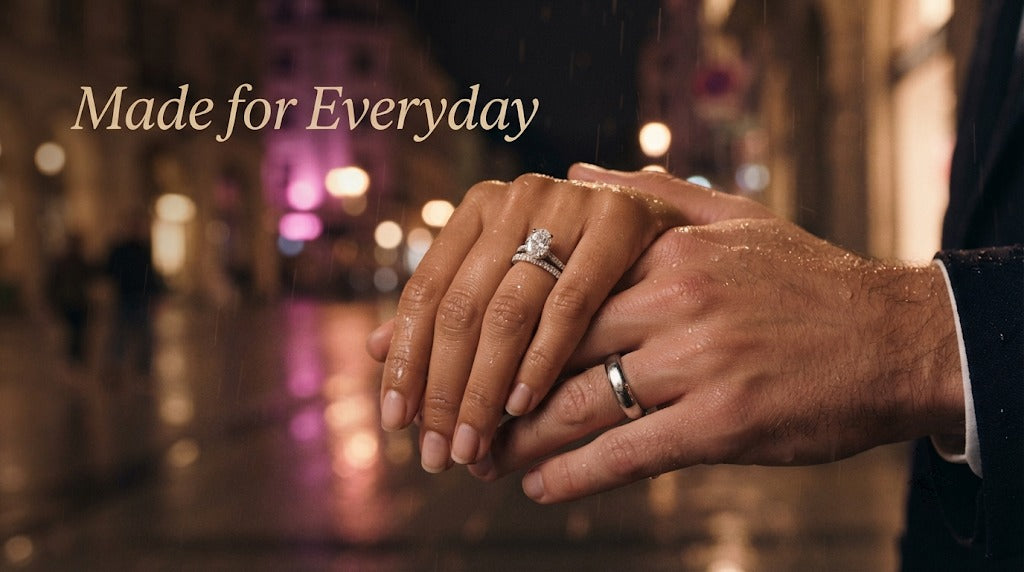
Lab grown diamonds and moissanite are tough enough for real life, so you do not need to baby the stones themselves. Protect the metal, the setting and the clasp: take rings and bracelets off for swimming, workouts, cleaning and, ideally, sleep and showers; keep studs secure; and clean your pieces regularly. A few easy habits mean your jewelry will keep its sparkle for years of everyday wear.
Shop the Look
-
 0.48 TCW Minimalist Celestial Starburst Lab Grown Diamond Band in Gold Dainty Cosmic Inspired Ring
From $ 1,127.00
Shop Now
-
 1.26 TCW Lab Grown Diamond Hoop Earrings in Gold Round Brilliant Cut Diamond Hoops Elegant Everyday Fine Jewelry
From $ 715.00
Shop Now
-
 0.96 TCW Triangle Lab Grown Diamond Stud Earrings in Gold Geometric Minimalist Diamond Earrings Everyday Luxury Jewelry
From $ 551.00
Shop Now
-
 1.50 TCW Round Cut Lab Grown Diamond Huggie Hoop Earrings in Gold Minimalist Everyday Luxury Hoop Earrings for Women
From $ 789.00
Shop Now
-
 2.80 TCW Heart Shape Lab Grown Diamond Drop Earrings in Gold Elegant Dainty Dangle Jewelry for Women
From $ 1,342.00
Shop Now
-
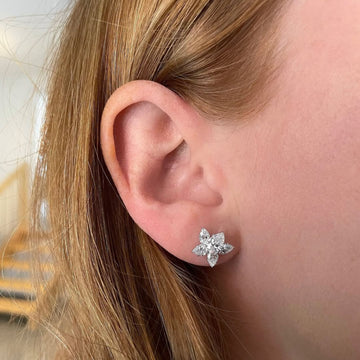 2.00 TCW Floral Marquise & Round Cut Lab Grown Diamond Stud Earrings, Luxury Flower Cluster Diamond Earrings Wedding Gift Earrings
From $ 1,047.00
Shop Now
-
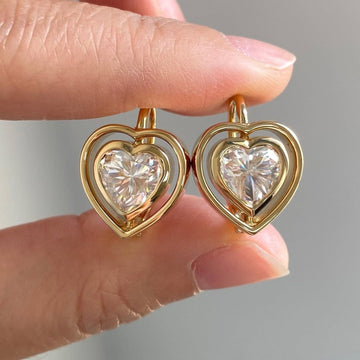 2.00 TCW Heart Shape Lab Grown Diamond Drop Earrings in Gold Double Heart Halo Dangle Earrings for Women Minimalist Romantic Jewelry Gift
From $ 989.00
Shop Now
-
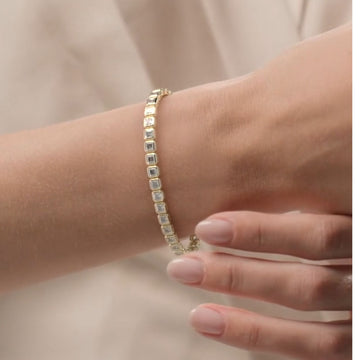 Diamond Tennis Bracelet with Geometric Lab Grown Diamond Bezel Settings Elegant Everyday Luxury Bracelet
From $ 3,499.20
Shop Now
-
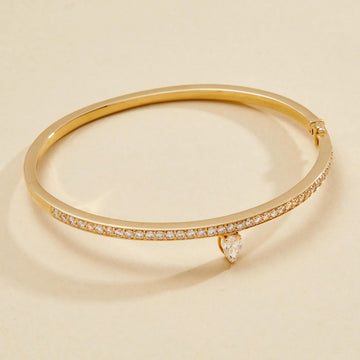 1.70 TCW Pear And Round Gold Bangle Bracelet Lab-Grown Diamonds Elegant and Timeless Luxury
From $ 1,162.80
Shop Now
-
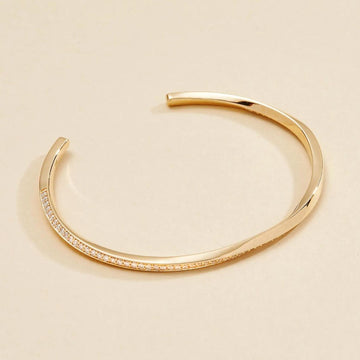 1.00 TCW Round Gold Twisted Bangle Bracelet Lab-Grown Diamond Statement Jewelry
From $ 667.00
Shop Now
-
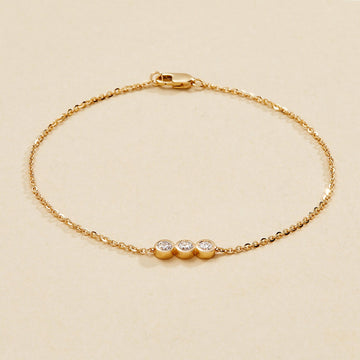 0.30 TCW Round Gold Bezel Set Lab-Grown Diamond Bracelet
From $ 384.00
Shop Now
-
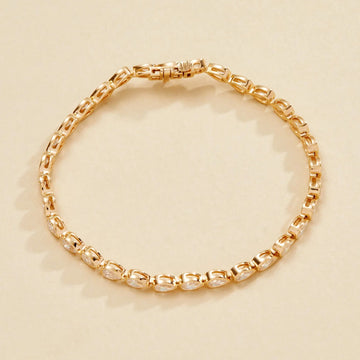 4.30 TCW Pear Lab Diamond Bracelet Gold Bezel Setting Jewellery
From $ 1,756.80
Shop Now
-
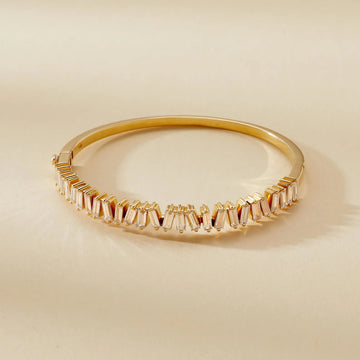 3.00 TCW Baguette Lab-Grown Diamond Bangle Bracelet: Modern Eternity
From $ 1,826.40
Shop Now
-
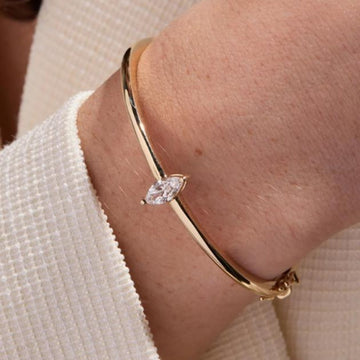 0.70 CT Marquise Yellow Gold Lab Grown Diamond Bangle Bracelet
From $ 656.40
Shop Now
-
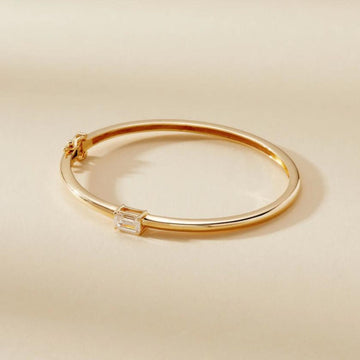 1.00 CT Emerald Cut Lab Diamond Bangle Minimalist Anniversary Gift
From $ 800.40
Shop Now