Education
Why Does My Engagement Ring Spin? Causes and Easy Fixes
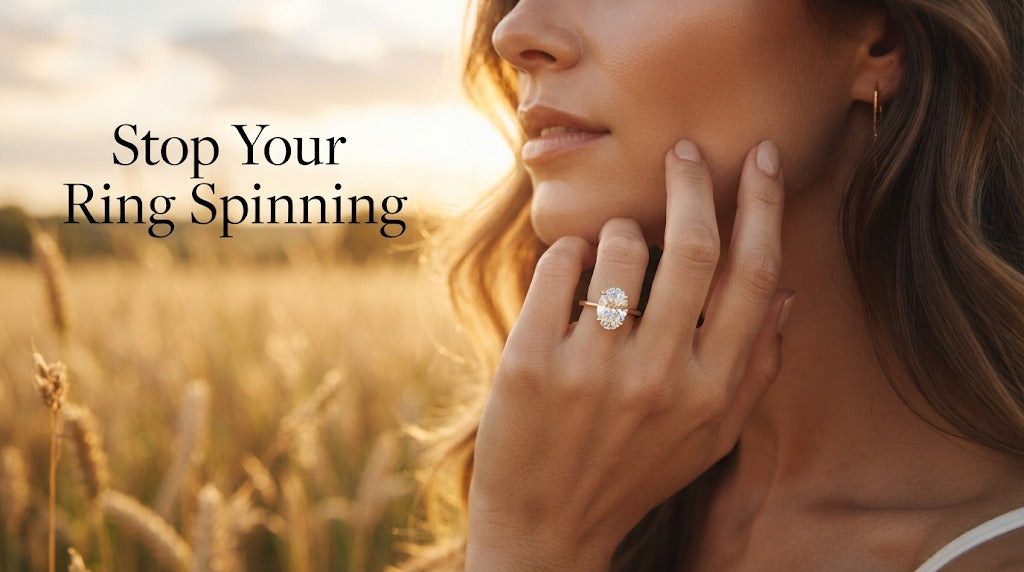
You glance down during a meeting and your center stone has slipped around to face your palm. Again. A spinning engagement ring is one of the most common complaints we hear, and it is rarely a sign that something is wrong with the ring itself. In most cases it comes down to fit, weight distribution and the shape of the band. The good news: nearly every spinning ring can be fixed, often without resizing at all.
This guide explains why rings rotate, how to tell whether yours is simply too big, and the practical fixes jewelers use, from quick at-home solutions to permanent adjustments for moissanite and lab grown diamond rings.
Why Engagement Rings Spin
A ring turns on your finger when gravity and movement have more influence than friction. Several factors usually combine.
1. The ring is slightly too large
This is the most common cause. Even half a size too big leaves enough space for the ring to rotate, especially on cool days when fingers shrink. If your ring slides easily over your knuckle with no resistance, it is probably loose.
2. Top-heavy design
A large center stone set high on a thin band puts most of the ring's weight at the top. Once your hand tilts, that weight pulls the stone downward toward the side or palm. Tall cathedral settings and big ovals, pears and radiants are especially prone to this.
3. A very thin or rounded band
Delicate 1.5 mm bands look beautiful, but they have very little surface contact with your skin. A comfort-fit or perfectly round inner profile also reduces grip, so the ring glides more easily.
4. Larger knuckles, slimmer finger base
If your knuckle is noticeably wider than the base of your finger, you need a size that slides over the knuckle. That size is often loose once the ring is on, which leaves room to spin.
5. Temperature and daily swelling
Fingers can change by up to half a size through the day. They shrink in cold weather and air-conditioned offices and swell with heat, exercise, salt and travel. A ring that fits perfectly in the evening may spin freely on a winter morning.
Is Your Ring Actually Too Big? A Quick Check


- The knuckle test: The ring should need a gentle push and a slight twist to pass the knuckle. If it falls off when you shake your hand downward, it is too big.
- The gap test: Look at the ring from the side. A visible gap between the band and your skin means there is room to rotate.
- The time-of-day test: Check the fit in the morning, after a workout and in the evening. If it only spins when you are cold, a sizing aid may be better than resizing.
If the ring is more than a half size too large, a professional resize is usually the best long-term fix. If it is borderline, try the options below first.
Quick Fixes You Can Try at Home
Silicone ring sizers and adjusters
Clear silicone coils or tubes wrap around the inside of the band and take up a little space. They are inexpensive, invisible from the top and easy to remove. They work best for rings that are a quarter to a half size too large. Replace them regularly, because they can trap soap and moisture against your skin.
Ring guards
Metal or plastic ring guards clip onto the band to reduce its inner diameter. They are a good temporary solution while you decide on resizing, but they can be visible and may scratch softer metals over time.
Add a wedding band or stacking band
Wearing a band below your engagement ring often stops spinning on its own. The two rings rub against each other, adding friction and stability. A slightly snug band also acts like an anchor. If you plan to wear a band anyway, start with a fit check of the pair together. Browse our moissanite wedding bands for options that sit flush with most settings.
Permanent Fixes From a Jeweler
Resizing
Going down a quarter or half size is a routine job for most solid gold and platinum rings. The jeweler removes a small section of metal, rejoins the band and refinishes it so the seam disappears. Full eternity bands and some intricate pavé designs are harder to resize, so check before you buy.
Sizing beads or speed bumps
Two small metal beads are soldered inside the band at roughly 4 and 8 o'clock. They grip your finger without making the ring harder to pass over the knuckle. This is a favorite fix for people with larger knuckles.
Flat or squared inner profile
Some jewelers can reshape the inside of the shank so it is flatter or slightly squared. More flat surface means more friction and less rotation.
Hinged or spring shanks
For large knuckles, a hinged shank opens to pass over the joint, then closes snugly at the base. It is a bigger investment but solves the problem completely.
Choosing a Ring That Won't Spin
If you have not bought your ring yet, a few design choices make spinning far less likely:
- Pick a slightly wider band. A 2 mm to 2.5 mm band offers better balance than an ultra-thin shank, especially for stones over 1.5 carats.
- Keep the setting lower. Low-profile and bezel settings place the stone closer to your finger, lowering the center of gravity. Our moissanite bezel rings are a great choice for active lifestyles.
- Consider a classic solitaire with a tapered band. A band that is thicker at the base and narrower near the stone keeps weight balanced. Explore our lab grown diamond solitaire rings for balanced, timeless profiles.
- Plan for a matching band. A curved lab grown diamond band nests against the center stone and helps hold the whole stack in place.
- Size at the right moment. Measure at room temperature, late in the day, and avoid sizing right after exercise or a hot shower.
Does Spinning Damage a Ring?
Spinning itself rarely damages a well-made ring, but it does expose the stone to more knocks. When the center stone faces your palm, it can hit door handles, desks and weights. Moissanite and lab grown diamonds are very hard, but prongs can still bend. If your ring spins often, check the prongs every few months and have a jeweler tighten them once a year.
Frequently Asked Questions
Is it normal for an engagement ring to spin a little?
Yes. A slight shift, especially with a large stone, is normal. Constant spinning that leaves the stone facing your palm usually means the ring is too loose or top-heavy.
Should I size down if my ring spins?
Only if it is loose all day. If it spins only in cold weather, try a silicone sizer or sizing beads instead, so the ring still fits comfortably when your fingers swell.
Do sizing beads hurt?
No. The beads are small and polished. Most people stop noticing them within a day or two.
Can a wedding band stop my engagement ring from spinning?
Often, yes. The extra friction between two rings usually keeps the center stone upright, especially when the band fits slightly snug.
Are moissanite rings more likely to spin than diamond rings?
No. Moissanite is slightly lighter than diamond, so a moissanite ring of the same size is marginally less top-heavy. Spinning depends on fit and design, not the stone type.
The Bottom Line
A spinning engagement ring is a fit and balance problem, not a quality problem. Start by checking the size at different times of day, try a silicone adjuster or a matching band, and visit a jeweler for sizing beads or a resize if needed. With a balanced setting and the right size, your stone will stay right where it belongs: facing up and catching the light.
Shop the Look
-
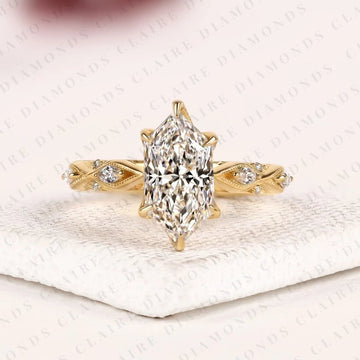 Dutch Marquise Cut Lab Grown Diamond Engagement Ring Leaf Vine Band Nature Inspired Unique Bridal Ring Luxury Wedding Jewelry
From $ 933.00
Shop Now
-
 Marquise Cut Lab Grown Diamond Engagement Ring | Floral Inspired Diamond Side Stone Ring | Yellow Gold Bridal Ring | Elegant Nature Inspired Wedding Jewelry
From $ 1,633.00
Shop Now
-
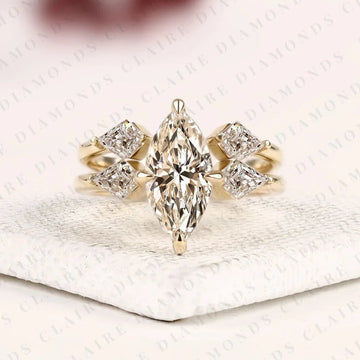 Marquise Cut Lab Grown Diamond Engagement Ring Bridal Set with Kite Cut Three Stone Ring Modern Unique Bridal Jewelry
From $ 1,588.00
Shop Now
-
 Oval Cut Lab Grown Diamond Engagement Ring | Floral Cluster Side Stone Ring | Yellow Gold Nature Inspired Bridal Jewelry | Elegant Statement Wedding Ring
From $ 1,492.00
Shop Now
-
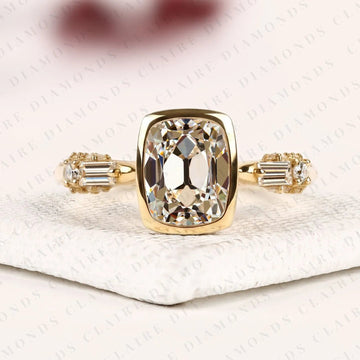 Old Mine Elongated Cushion Cut Lab Grown Diamond Engagement Ring Yellow Gold Bezel Ring with Baguette Side Stone Modern Luxury Bridal Jewelry
From $ 1,554.00
Shop Now
-
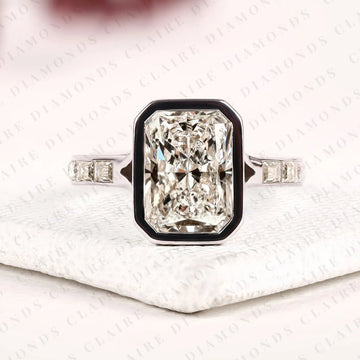 Radiant Cut Lab Grown Diamond Bezel Set Engagement Ring with Baguette Pave Set White Gold Modern Luxury Bridal Jewelry
From $ 1,505.00
Shop Now
-
 Radiant Cut Lab Grown Diamond Three Stone Engagement Ring | Pear Cut Side Stone Gold Ring | Beaded Bezel Statement Bridal Jewelry | Modern Luxury Wedding Ring
From $ 1,468.00
Shop Now
-
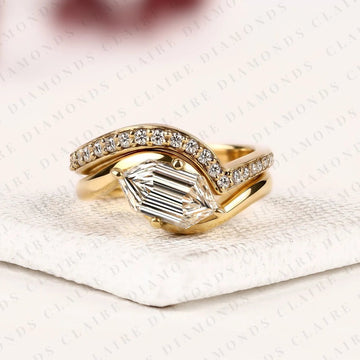 East-West Hexagon Cut Lab Grown Diamond Engagement Ring | Yellow Gold Bypass Pavé Band | Geometric Modern Bridal Ring Set | Unique Statement Jewelry
From $ 873.00
Shop Now
-
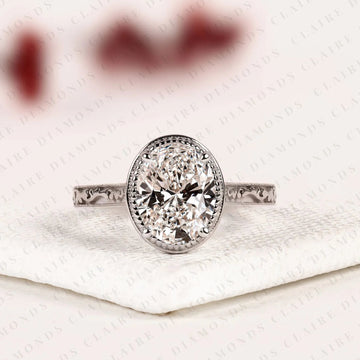 Oval Cut Lab Grown Diamond Engagement Ring Vintage Milgrain Bezel Setting White Gold Engraved Band Elegant Solitaire Bridal Jewelry
From $ 744.00
Shop Now
-
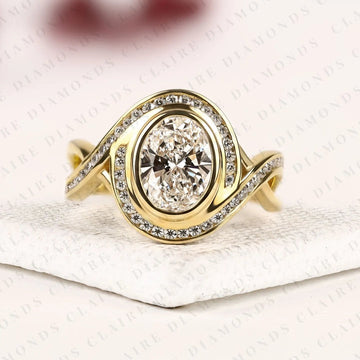 Oval Cut Lab Grown Diamond Engagement Ring | Pavé Bezel Halo Yellow Gold Bypass Ring | Twisted Split Shank Bridal Jewelry | Modern Statement Ring
From $ 939.00
Shop Now
-
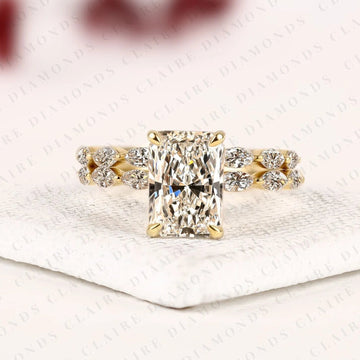 Radiant Cut Lab Grown Diamond Engagement Ring Set Yellow Gold Double Band with Pavé Side Stones Unique Luxury Bridal Ring Set
From $ 1,766.00
Shop Now
-
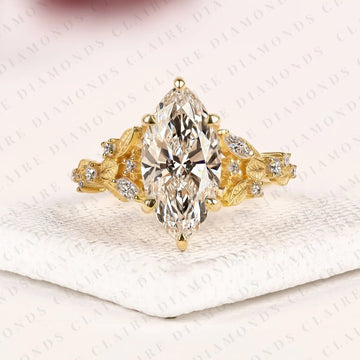 Marquise Cut Lab Grown Diamond Engagement Ring, Floral Leaf Vine Gold Ring, Nature Inspired Bridal Ring, Unique Vintage Wedding Jewelry
From $ 1,407.00
Shop Now
-
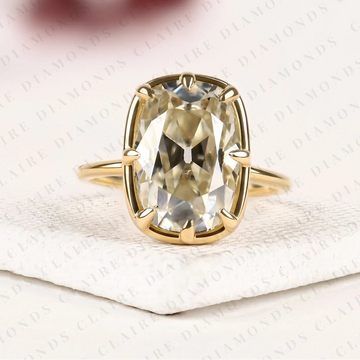 Old Mine Elongated Cushion Cut Lab Grown Diamond Solitaire Engagement Ring Diamond Ring Classic Minimalist Bridal Ring for Women
From $ 2,630.00
Shop Now
-
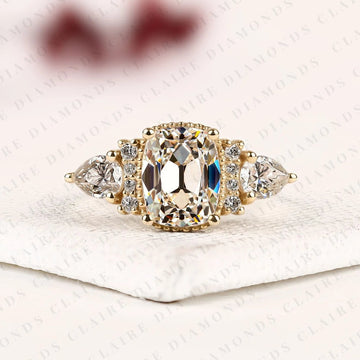 Old Mine Elongated Cushion Cut Lab Grown Diamond Engagement Ring, Milgrain Bezel Setting, Pear Side Stones, Yellow Gold Vintage Bridal Ring
From $ 1,535.00
Shop Now
-
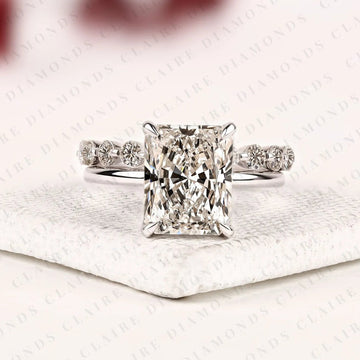 Radiant Cut Lab Grown Diamond Engagement Ring with White Gold Pavé Band | Elongated Radiant Center Stone Modern Classic Bridal Ring Set
From $ 1,674.00
Shop Now