
Moissanite Diamonds
Moissanite vs Cubic Zirconia: How to Tell Them Apart and Which Lasts

Moissanite and cubic zirconia are often lumped together as "diamond alternatives," but they are very different stones. One is a durable gemstone built for a lifetime of daily wear; the other is an inexpensive simulant that tends to look tired within a few years. If you are shopping for an engagement ring, wedding band or everyday fine jewelry, knowing the difference will protect both your budget and your sparkle.
This guide compares moissanite vs cubic zirconia on hardness, brilliance, color, longevity, price and value, then shows you simple ways to tell them apart at home.
What Is Moissanite?
Moissanite is silicon carbide, a mineral first discovered in tiny amounts in a meteor crater. Natural moissanite is far too rare to use in jewelry, so the moissanite you see today is created in a lab. It is a true gemstone with its own crystal structure, its own optical properties and an exceptional hardness rating.
Because it is grown under controlled conditions, modern moissanite is available in near-colorless grades (D–F) and in every popular shape, from round brilliant to oval, pear, emerald and antique cuts.
What Is Cubic Zirconia?
Cubic zirconia (CZ) is synthetic zirconium dioxide. It was developed as a low-cost diamond simulant and is mass produced for costume and fashion jewelry. CZ can look bright when brand new, but it is softer, heavier and more prone to scratches and residue than moissanite or diamond.
Moissanite vs Cubic Zirconia: Side-by-Side
Hardness and Durability
Hardness is the biggest difference. Moissanite scores about 9.25 on the Mohs scale, second only to diamond (10). Cubic zirconia sits around 8–8.5. That gap sounds small, but the Mohs scale is not linear: everyday dust and grit can scratch CZ over time, while moissanite resists scratching for decades.
In practice, a CZ ring worn daily will usually show rounded facet edges and a hazy surface within a few years. A moissanite engagement ring keeps crisp facets and can be passed down as an heirloom.
Brilliance and Fire
Moissanite has a refractive index of roughly 2.65, higher than diamond (2.42) and much higher than CZ (about 2.15). It also has strong dispersion, which creates the colorful "rainbow" flashes many people love. Cubic zirconia reflects light well when clean, but its sparkle is softer and flatter, and it loses brightness quickly as the surface wears.
Color and Clarity
High-quality moissanite is graded on a diamond-style color scale, with near-colorless stones looking icy white in a ring. CZ is usually flawless and colorless when new, but it can develop a cloudy or slightly yellowed look as oils and scratches build up.
Weight
Cubic zirconia is about 1.7 times denser than diamond, so a CZ stone of the same size feels noticeably heavier. Moissanite is slightly lighter than diamond, which is why moissanite is often sold by diamond-equivalent millimeter size.
Price and Value
CZ is very inexpensive, often just a few dollars per stone. Moissanite costs more, but still a fraction of a mined diamond. The real question is value over time: a CZ ring may need replacing several times, while a moissanite ring is a one-time purchase meant to last a lifetime.

How to Tell Moissanite and Cubic Zirconia Apart
- Look for rainbow fire: In sunlight, moissanite throws vivid flashes of color. CZ shows more white, glassy reflections.
- Check the facet edges: Under a 10x loupe, moissanite facets look sharp. Worn CZ shows rounded, scuffed edges.
- Try a moissanite tester: Electrical conductivity testers will flag moissanite but not CZ, because silicon carbide conducts electricity and zirconium dioxide does not.
- Look for doubling: Moissanite is doubly refractive, so when viewed through the side of the stone you may see facet lines appear doubled. CZ is singly refractive.
- Ask for documentation: Reputable jewelers provide a certificate or authenticity card for moissanite. CZ is rarely documented.
Which Should You Choose?
Choose cubic zirconia for short-term fashion pieces, travel stand-ins or costume jewelry where low cost matters more than longevity.
Choose moissanite for anything you plan to wear every day or keep for years: engagement rings, wedding bands, stud earrings and tennis bracelets. It delivers brilliance close to (and in some lights beyond) diamond at an accessible price, without the fading and scratching that come with CZ.
Browse our moissanite engagement rings, or start with a timeless moissanite solitaire ring. For a vintage look, the Old Mine Oval Moissanite Engagement Ring shows off moissanite's warm, romantic fire beautifully.
What About Earrings and Wedding Bands?
The same rules apply beyond engagement rings. Stud earrings and pendants face less abrasion than rings, so CZ lasts a little longer there, but it still clouds with lotion, perfume and hairspray. Wedding bands and eternity bands take daily knocks against desks, steering wheels and counters, which is exactly where moissanite's hardness pays off. If a piece will touch your hands every day, moissanite is the safer long-term choice.
Caring for Moissanite So It Stays Brilliant
Moissanite is low maintenance. Soak it in warm water with a drop of mild dish soap, brush gently with a soft toothbrush behind the stone, rinse and pat dry. Store pieces separately so harder stones do not rub against softer metals. A quick clean every couple of weeks keeps the fire bright.
Frequently Asked Questions
Is moissanite better than cubic zirconia?
For fine jewelry, yes. Moissanite is harder, more brilliant and far more durable, so it keeps its sparkle for a lifetime while CZ tends to scratch and cloud.
Does moissanite get cloudy like CZ?
No. Moissanite does not turn cloudy over time. If it looks dull, it simply needs cleaning to remove lotion and skin oils.
Can people tell my ring is moissanite and not CZ?
Most people cannot tell moissanite from diamond at a glance, and it looks noticeably livelier than CZ. A jeweler with a tester can identify moissanite, but it will never test as CZ.
Is moissanite worth the extra cost over CZ?
If you will wear the piece often, yes. Moissanite is a long-term investment in durability, while CZ is typically replaced after a few years of daily wear.
Is moissanite a good choice for an engagement ring?
Absolutely. Its 9.25 hardness, near-colorless grades and strong brilliance make moissanite one of the most popular engagement ring stones for couples who want lasting beauty and value.
Shop the Look
-
 Marquise Cut Moissanite Diamond Engagement Ring | Floral Inspired Diamond Side Stone Ring | Yellow Gold Bridal Ring | Elegant Nature Inspired Wedding Jewelry
From $ 232.00
Shop Now
-
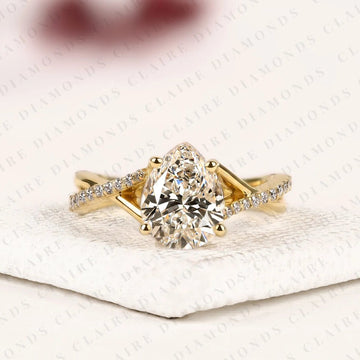 Pear Cut Moissanite Diamond Engagement Ring | Yellow Gold Split Shank Pavé Ring | Modern Elegant Bridal Jewelry | Unique Solitaire Engagement Ring
From $ 207.00
Shop Now
-
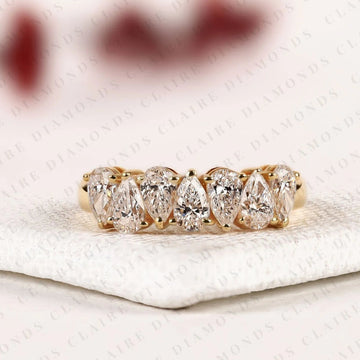 1.75 TCW Pear Cut Moissanite Diamond Band in Gold Elegant Pear Shape Eternity Wedding Band for Women
From $ 215.00
Shop Now
-
 Old Mine Elongated Cushion Cut Moissanite Engagement Ring in Solid Gold | Classic Solitaire Wedding Ring
From $ 219.00
Shop Now
-
 Green Oval Cut Moissanite Diamond Ring with Marquise Side Stones, Nature Inspired Gold Engagement Ring for Women
From $ 235.00
Shop Now
-
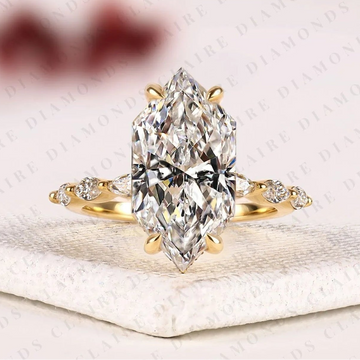 Unique Dutch Marquise Moissanite Diamond Hidden Halo Engagement Ring | Yellow Gold Botanical Leaf Four-Prong Setting
From $ 232.00
Shop Now
-
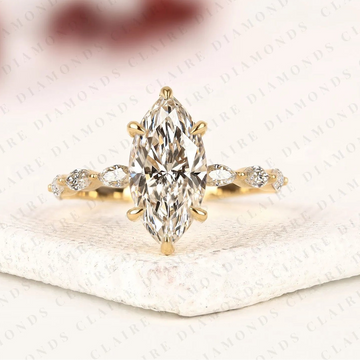 Marquise Cut Moissanite Diamond Engagement Ring Yellow Gold Side Stone Ring Anniversary Ring.
From $ 233.00
Shop Now
-
 Radiant Cut Hidden Halo Moissanite Diamonds Engagement Ring with Pavé Band – Luxurious Brilliance for Your Forever
From $ 227.00
Shop Now
-
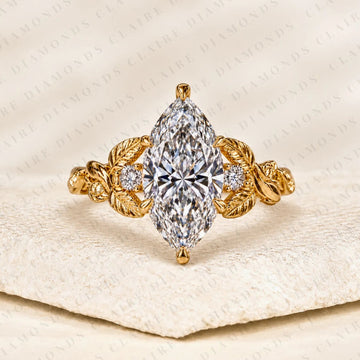 Marquise Cut Moissanite Diamond Engagement Ring Nature Inspired Gold Vine Ring with Leaf Vintage Luxury Wedding Ring for Women
From $ 235.00
Shop Now
-
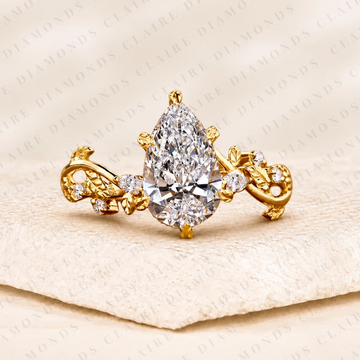 Pear Cut Moissanite Diamond Engagement Ring Nature Inspired Gold Vine Ring Floral Vintage Wedding Ring Luxury Bridal Jewelry
From $ 227.00
Shop Now
-
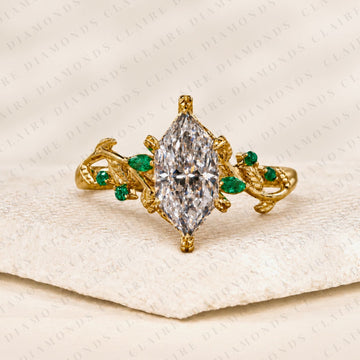 Dutch Marquise Cut Moissanite Diamond Engagement Nature Inspired Ring Green Marquise Side Stones Vintage Bridal Jewelry
From $ 227.00
Shop Now
-
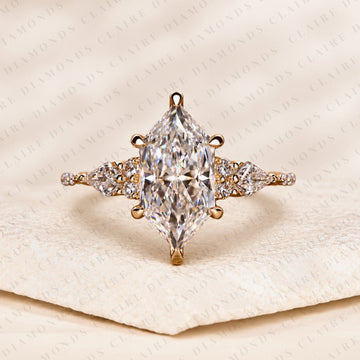 Dutch Marquise Cut Moissanite Diamond Engagement Ring with Kite Cut Side Stones Luxury Wedding Ring for Women
From $ 228.00
Shop Now
-
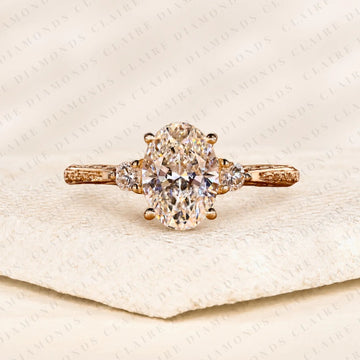 Oval Cut Moissanite Diamond Ring Vintage Inspired Three Stone Engagement Ring with Side Diamonds Timeless Jewelry
From $ 227.00
Shop Now
-
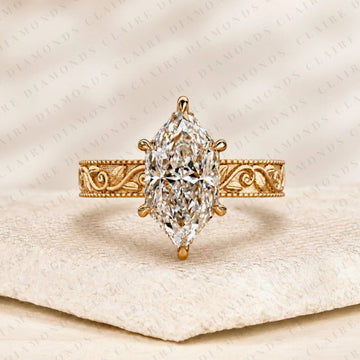 Dutch Marquise Cut Moissanite Diamond Engagement Solitaire Ring Vintage Engraved Gold Band Filigree Wedding Ring Luxury Bridal Jewelry
From $ 234.00
Shop Now
-
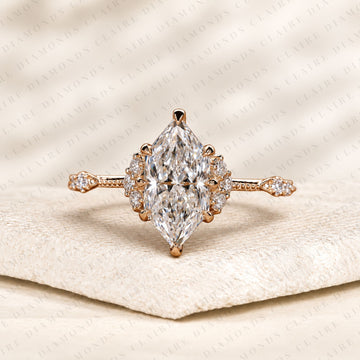 Dutch Marquise Cut Moissanite Diamond Engagement Ring Rose Gold with Pavé Accents Vintage Inspired Luxury Wedding Ring for Women
From $ 225.00
Shop Now


