
Engagement Rings
Asscher Cut Engagement Rings: Art Deco Style, Settings and Buying Tips
If you love clean lines, vintage glamour and a stone that looks like a window into light, the Asscher cut deserves a spot on your shortlist. This square step cut was born in the early 1900s, became an icon of the Art Deco era, and is having a real moment again with modern couples who want something classic but not common. Here is everything you need to know to choose an Asscher cut engagement ring with confidence, whether you prefer a lab grown diamond or moissanite.
What Is an Asscher Cut?
An Asscher cut is a square step-cut stone with deeply cropped corners, which give it an octagonal outline. Instead of the many small triangular facets you see on a round brilliant, it has broad, parallel facets arranged like stairs. Look straight down into a well-cut Asscher and you will see a pattern of concentric squares that seems to draw your eye into the center of the stone. Jewelers often call this the "hall of mirrors" effect.
The cut was first developed in 1902 by the Asscher family of diamond cutters in Amsterdam. The modern version, refined in the early 2000s, added more facets and a larger table so it reflects more light than early versions, while keeping its signature geometry.
Asscher vs Emerald Cut
The Asscher is often described as a square emerald cut, and that is close. Both are step cuts with cut corners, but an emerald cut is rectangular and elongated, while an Asscher is square (a length-to-width ratio of roughly 1.00 to 1.05). The emerald cut makes fingers look longer; the Asscher feels more compact, architectural and bold. If you are torn between the two, read our engagement ring guides on shape and ratio before you decide.
Asscher vs Princess Cut
A princess cut is also square, but it is a brilliant cut with sharp corners and lots of small facets that create scattered sparkle. An Asscher trades that glitter for broad flashes of light and a calmer, more sophisticated look. Its clipped corners are also less prone to chipping than the pointed corners of a princess cut.
Why Choose an Asscher Cut Engagement Ring?
- Vintage character: It instantly reads as Art Deco, perfect if you love 1920s style, old Hollywood or estate jewelry.
- Distinctive look: Far fewer people wear Asscher cuts than rounds or ovals, so your ring feels personal.
- Clean geometry: The symmetry suits minimalists as well as lovers of statement pieces.
- Durable shape: Cropped corners reduce weak points compared with other square shapes.
Lab Grown Diamond or Moissanite?
Because step cuts show the inside of a stone more clearly, material choice matters with an Asscher.
Lab grown diamond has the same chemical, physical and optical properties as a mined diamond. In a step cut it delivers crisp, mirror-like flashes and that classic diamond look. Choose a lab grown Asscher if you want the traditional diamond appearance and a certified stone. Browse our Asscher lab grown diamond jewelry to compare settings.
Moissanite is slightly more fiery than diamond, so an Asscher moissanite shows a little more rainbow color in its flashes. It is extremely hard (9.25 on the Mohs scale) and a beautiful choice if you want a larger stone for everyday wear. Explore the Asscher moissanite collection to see the difference.
How to Choose a Beautiful Asscher Cut Stone
Clarity Matters More Than Usual
Step cuts have open, glassy facets, so inclusions are easier to see than in brilliant cuts. For a lab grown diamond Asscher, aim for VS2 or higher if you want a clean look to the naked eye. Moissanite is generally grown with very high clarity, which is one reason it suits this shape so well.
Color Choices
Asschers can show a hint of warmth in their corners. If you want an icy white stone set in white gold or platinum, choose a colorless grade (D to F for diamonds). Near-colorless stones can look lovely in yellow or rose gold, where a touch of warmth blends with the metal.
Ratio and Symmetry
Look for a ratio between 1.00 and 1.05 so the stone looks truly square. The concentric "windmill" pattern should be centered and even. If the steps look off-balance or the center looks dark, the proportions may be off.
Carat and Face-Up Size
Asschers carry more weight in their depth than some shapes, so a 1 carat Asscher can look slightly smaller face-up than a 1 carat oval. Many people go up a little in carat weight or choose a setting that adds visual presence.
Best Settings for an Asscher Cut
Classic Solitaire
A four-prong or double-claw solitaire lets the geometry speak for itself. Place the prongs on the cropped corners for a clean, square silhouette. Our Asscher cut moissanite split shank solitaire pairs the stone with a modern split band for extra presence.
East-West
Turning the stone 45 degrees or setting it horizontally gives an Asscher a fresh, contemporary feel. An east-west Asscher reads as fashion-forward while keeping its vintage DNA.
Half Bezel and Full Bezel
A bezel wraps metal around the stone's edges, protecting the corners and creating a sleek outline. A half bezel keeps two sides open for more light. Bezels are ideal for active lifestyles and hands-on careers.
Halo and Art Deco Details
A square or octagonal halo of small stones adds sparkle around the calm step-cut center, balancing flash and brilliance. Milgrain edges, baguette side stones or stepped shoulders lean into the Art Deco heritage.
Choosing the Metal
Platinum and white gold make an Asscher look crisp and cool, true to its 1920s roots. Yellow gold creates a warm, heirloom look that is very current. Rose gold adds a soft romantic twist. If you plan to stack, consider matching your future wedding band now; bridal sets made for the Asscher shape take the guesswork out of fit.
Caring for an Asscher Cut Ring
Step cuts show dirt and oil quickly because the large table acts like a window. Clean your ring every week or two with warm water, mild dish soap and a soft toothbrush, then rinse and dry with a lint-free cloth. Have prongs checked once a year, especially if your stone sits in a raised setting.
Frequently Asked Questions
Does an Asscher cut sparkle?
Yes, but differently from a round. It shows broad, mirror-like flashes rather than tiny scattered sparkles. Many people find this effect more elegant and sophisticated.
Is an Asscher cut good for small hands?
Yes. Its compact square shape sits neatly on slim fingers. A thin band or a petite halo keeps proportions balanced.
Does an Asscher cut look smaller than other shapes?
It can look slightly smaller face-up than an oval or pear of the same carat weight because more weight sits in its depth. A halo or bezel can make it appear larger.
Is moissanite a good choice for an Asscher cut?
Very. Moissanite's high clarity and hardness make it well suited to step cuts, and it adds a touch of extra fire to the classic hall-of-mirrors pattern.
What wedding band goes with an Asscher cut ring?
Straight eternity bands, baguette bands and plain metal bands all pair well. For a low setting, a curved or notched band can sit flush against the ring.
Final Thoughts
An Asscher cut engagement ring combines a century of design history with a look that still feels fresh. Focus on clarity, a square ratio and a setting that protects the corners, then choose the metal and material that suit your style. Whether you choose lab grown diamond or moissanite, the result is a ring with quiet confidence and timeless glamour.
Shop the Look
-
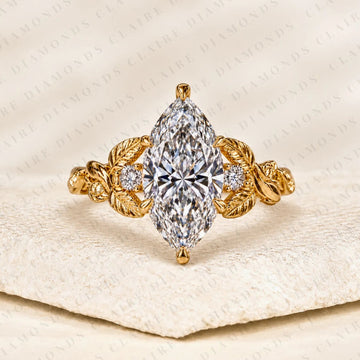 Marquise Cut Lab Grown Diamond Engagement Ring Nature Inspired Gold Vine Ring with Leaf Vintage Luxury Wedding Ring for Women
From $ 1,407.00
Shop Now
-
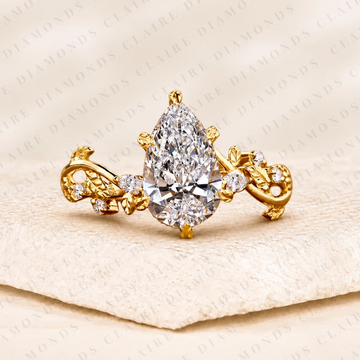 Pear Cut Lab Grown Diamond Engagement Ring Nature Inspired Gold Vine Ring Floral Vintage Wedding Ring Luxury Bridal Jewelry
From $ 1,370.00
Shop Now
-
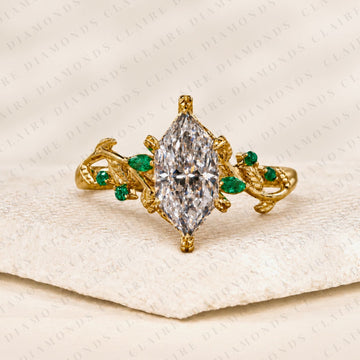 Dutch Marquise Cut Lab Grown Diamond Engagement Nature Inspired Ring Green Marquise Side Stones Vintage Bridal Jewelry
From $ 1,422.00
Shop Now
-
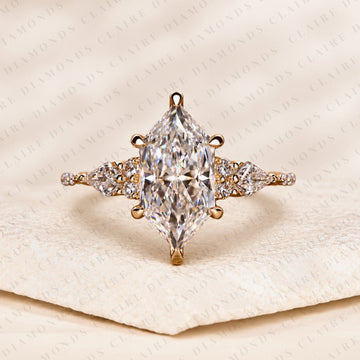 Dutch Marquise Cut Lab Grown Diamond Engagement Ring with Kite Cut Side Stones Luxury Wedding Ring for Women
From $ 1,473.00
Shop Now
-
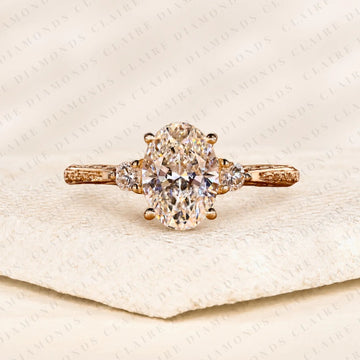 Oval Cut Lab Grown Diamond Ring Vintage Inspired Three Stone Engagement Ring with Side Diamonds Timeless Jewelry
From $ 1,458.00
Shop Now
-
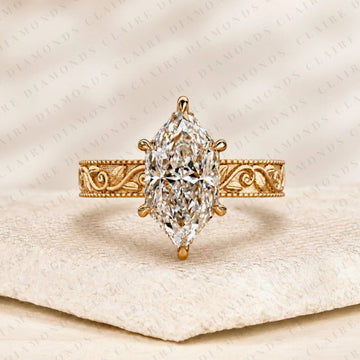 Dutch Marquise Cut Lab Grown Diamond Engagement Solitaire Ring Vintage Engraved Gold Band Filigree Wedding Ring Luxury Bridal Jewelry
From $ 1,317.00
Shop Now
-
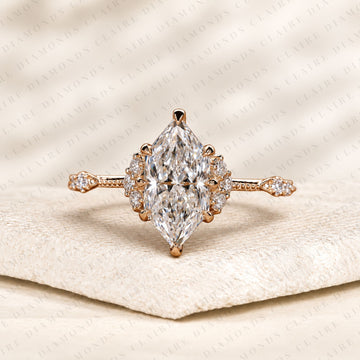 Dutch Marquise Cut Lab Grown Diamond Engagement Ring Rose Gold with Pavé Accents Vintage Inspired Luxury Wedding Ring for Women
From $ 1,373.00
Shop Now
-
 Oval Cut Moissanite Diamond Band Floral Pave Gold Engagement Ring Nature Inspired Wedding Elegant Luxury Jewelry for Women
From $ 248.00
Shop Now
-
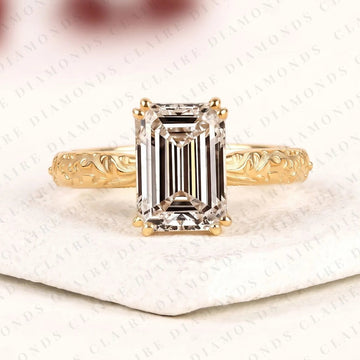 Emerald Cut Lab Grown Diamond Engagement Ring | Engraved Floral Gold Band with Pavé Accents | Vintage-Inspired Bridal Ring
From $ 1,397.00
Shop Now
-
Oval Cut Lab Grown Diamond Band Floral Pave Gold Engagement Ring Nature Inspired Wedding Elegant Luxury Jewelry for Women
From $ 1,402.00
Shop Now
-
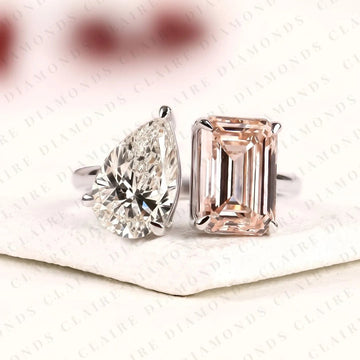 4.00 TCW Pear and Emerald Cut Toi et Moi Lab Grown Diamond Ring | Two-Stone Modern Gold Engagement Ring | Unique Luxury Bridal Jewelry
From $ 2,441.00
Shop Now
-
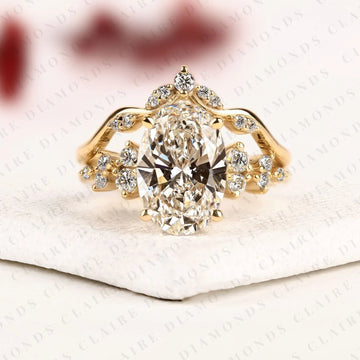 Oval Cut Lab Grown Diamond Engagement Ring Set Nature Inspired Wedding Ring with Floral Pave Accents Luxury Bridal Set Jewelry
From $ 1,422.00
Shop Now
-
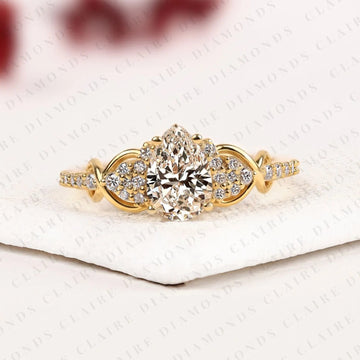 Pear Cut Lab Grown Diamond Engagement Ring Vintage Gold Halo Ring with Pave Side Stones Elegant Wedding Ring for Women
From $ 836.00
Shop Now
-
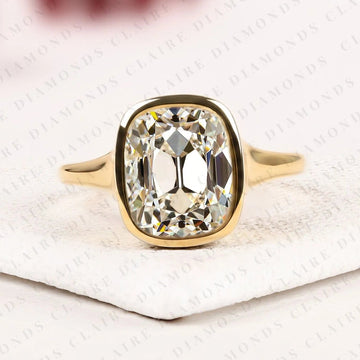 Old Mine Elongated Cushion Cut Lab Grown Diamond Engagement Ring Bezel Set Gold Solitaire Minimalist Vintage Wedding Ring for Women
From $ 1,343.00
Shop Now
-
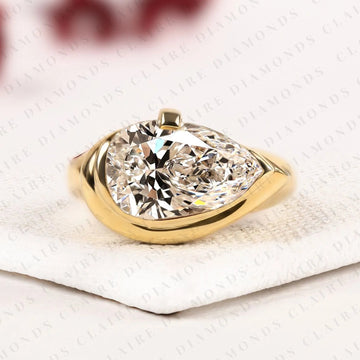 East West Pear Cut Lab Grown Diamond Engagement Ring Bezel Set Gold Solitaire Wedding Ring Unique Anniversary Jewelry
From $ 1,910.00
Shop Now

