
Lab Grown Diamonds
Lab Grown Diamond Color Grades Explained: D to J and What to Choose

Color is one of the easiest diamond grades to overthink. You will see letters from D to Z on every lab grown diamond report, and the price difference between two neighboring grades can be real. The good news is that the eye is far less sensitive to small color changes than a grading lab, and a smart color choice depends on three things you control: the shape of the stone, the metal of the setting, and your budget. This guide explains how lab grown diamond color grades work and how to pick the one that looks best on your hand.
What Diamond Color Actually Measures
In white diamonds, "color" really means the absence of color. Graders compare each stone face-down against master stones under controlled lighting and assign a letter. A D diamond shows no detectable body color, while stones further down the scale show an increasingly visible warm, slightly yellow or brown tint.
Lab grown diamonds are graded on the same D-to-Z scale as mined diamonds by labs such as IGI and GIA. They are chemically and optically the same material, so a G lab diamond and a G mined diamond should look the same color. If you want a refresher on reading the report itself, see our guide to reading an IGI lab grown diamond report.
The Color Scale at a Glance
D, E, F: Colorless
The top tier. Even trained graders need a face-down comparison to tell these apart. D is the rarest letter in mined stones; in lab grown diamonds it is more available, but it still carries a premium over E and F with no difference you could see once the stone is set.
G, H, I, J: Near Colorless
This is where most buyers find the best value. Face-up in a ring, G and H stones look white to almost everyone. I and J can show a hint of warmth in larger stones or certain shapes, which many people actually find soft and romantic, especially in yellow or rose gold.
K and Below: Faint Color
From K downward, warmth becomes noticeable to the naked eye. These grades are uncommon in fine lab grown jewelry because most growers and cutters aim for the colorless and near-colorless range.
Why Most Buyers Choose G or H
When a diamond is set and worn, you view it face-up, where light returning from the facets masks much of the body color. That is why a well-cut G or H stone looks as bright and icy as a D on the hand. Choosing G or H instead of D or E lets you put the savings toward a better cut, a larger carat weight, or an upgraded metal. For a classic look, browse our lab grown diamond solitaire engagement rings, where a near-colorless center stone shines beautifully.
How Diamond Shape Changes the Color You See
Cut style matters almost as much as the letter grade.
- Round brilliant: The most efficient light performer. Its sparkle hides color well, so G to I is usually plenty.
- Oval, pear and marquise: Brilliant-style cuts that hide color fairly well, though color can gather at the tips. G or H is a safe target. Explore our oval lab grown diamond collection for elongated shapes.
- Emerald and Asscher: Step cuts have broad, open facets that act like windows, so color shows more easily. Many buyers move up to F or G here.
- Cushion and radiant: Larger or deeper stones can hold color in the corners. Aim one grade higher than you would for a round.
Matching Color Grade to Your Metal
The metal around the stone reflects into it, so your setting can make a diamond look whiter or warmer.
Platinum and White Gold
Cool, bright metals emphasize any warmth in the stone, so they pair best with colorless or high near-colorless grades (D to H). A crisp white setting and an icy stone together create that classic bridal look.
Yellow Gold
Warm gold reflects into the diamond and tints it slightly anyway, so paying for D or E rarely makes sense. H, I or even J can look perfectly balanced and save a meaningful amount.
Rose Gold
Rose gold flatters near-colorless stones and gives slightly warm grades a soft blush glow. H to J works well for most shapes.
A popular trick is a two-tone ring: a white gold or platinum head holding the stone on a yellow or rose gold band. You get a whiter-looking center with the warmth of gold on the finger.

Carat Size and Color Visibility
Larger diamonds show more body color simply because light travels a longer path through them. Under about one carat, the difference between G and I is very hard to see. At two carats and above, especially in step cuts, stepping up a grade or two is often worth it. If you are deciding on size, our 1 carat vs 2 carat guide walks through how stones look on the hand.
Fluorescence and Lab Grown Color
Some lab grown diamonds show faint blue or other fluorescence under UV light. In everyday lighting it almost never affects appearance. Certain growing methods can occasionally leave a faint gray or brown undertone that a letter grade does not fully describe, which is why it helps to view real photos or video of a specific stone and to buy from a jeweler who curates for clean, white material.
Color vs Cut vs Clarity: Where to Spend
If budget is a factor, prioritize in this order for most shapes: cut first, then color, then clarity. Cut drives sparkle and can make a near-colorless stone look brighter than a poorly cut colorless one. Clarity matters only until the stone is eye-clean, which for most lab diamonds happens around VS2 or SI1. Our full lab grown diamond engagement ring collection lets you compare options across shapes and settings.
Quick Recommendations
- Round in platinum or white gold: G or H.
- Oval or pear in white metal: F to H.
- Emerald or Asscher in white metal: E to G.
- Any shape in yellow or rose gold: H to J.
- Two carats and up: Move one grade higher than the suggestion above.
For a warm vintage look, a design like this oval lab diamond engagement ring in vintage gold shows how a near-colorless stone glows in a yellow setting.
Frequently Asked Questions
Is a D color lab grown diamond worth it?
Only if owning the top grade matters to you. Once set and viewed face-up, D, E and F look the same, so many buyers choose F or G and spend the difference on cut or size.
Can you see the difference between G and H?
Not in normal wear. Side by side and face-down under grading lights, a trained eye can tell, but on the hand both look white.
Do lab grown diamonds change color over time?
No. A lab grown diamond's color is stable and will not fade, yellow or cloud with age. If a stone looks dull, it usually just needs cleaning.
What color grade is best for yellow gold?
H to J is the sweet spot. The warm metal reflects into the stone, so higher grades add cost without a visible benefit.
Is lab diamond color graded the same as moissanite?
They use similar letter scales, but moissanite has its own optical traits and can show color differently. See our moissanite color grade guide for a direct comparison.
Choose the Color That Looks Right to You
The best color grade is the one that looks white and beautiful in the setting you love, at a price that feels right. For most people that means a near-colorless G or H in white metal, or H to J in gold, paired with an excellent cut. Trust what you see face-up, not just the letter on the report, and your ring will sparkle for a lifetime.
Shop the Look
-
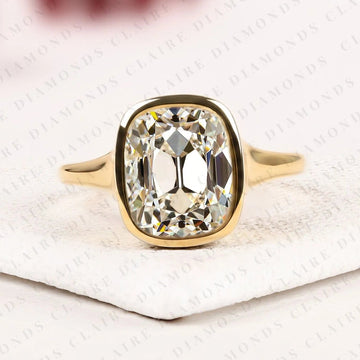 Old Mine Elongated Cushion Cut Lab Grown Diamond Engagement Ring Bezel Set Gold Solitaire Minimalist Vintage Wedding Ring for Women
From $ 1,343.00
Shop Now
-
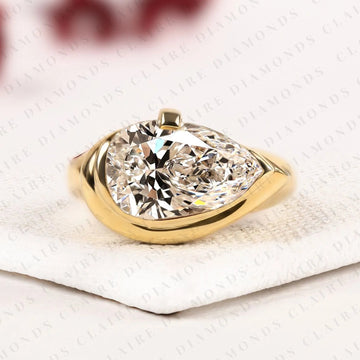 East West Pear Cut Lab Grown Diamond Engagement Ring Bezel Set Gold Solitaire Wedding Ring Unique Anniversary Jewelry
From $ 1,910.00
Shop Now
-
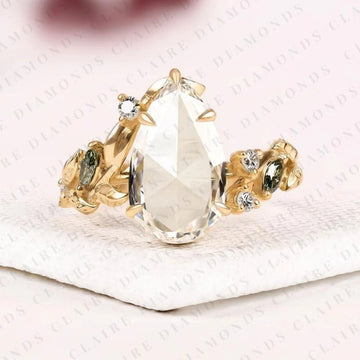 Pear Rose Cut Lab Grown Diamond Engagement Ring Green Marquise Side Stones Botanical Leaf Vine Gold Vintage Wedding Ring
From $ 1,385.00
Shop Now
-
 5.04 TCW Round Bezel Set Lab Grown Diamond Band Vintage Gold Eternity Wedding Band Elegant Anniversary Ring for Women
From $ 3,019.00
Shop Now
-
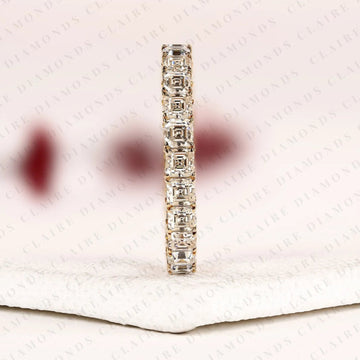 4.60 TCW Asscher Cut Lab Grown Diamond Eternity Band | Full Eternity Wedding Band | Geometric Gold Anniversary Band
From $ 2,778.00
Shop Now
-
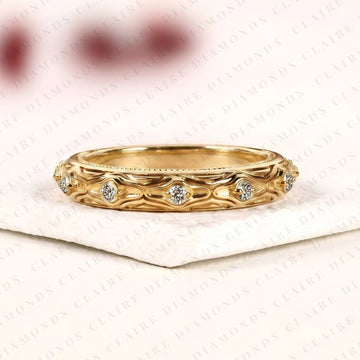 0.42 TCW Round Cut Lab Grown Diamond Band Vintage Engraved Gold Wedding Elegant Diamond Anniversary Band for Women
From $ 428.00
Shop Now
-
 Emerald Cut Lab Grown Diamond Eternity Band | Vintage-Inspired Geometric Gold Wedding Band | Eternity Anniversary Band
From $ 1,251.00
Shop Now
-
 3.35 TCW Round Cut Lab Grown Diamond Band Luxury Vintage Ornate Gold Band Multi Stone Wedding Band Elegant Anniversary Jewelry
From $ 2,075.00
Shop Now
-
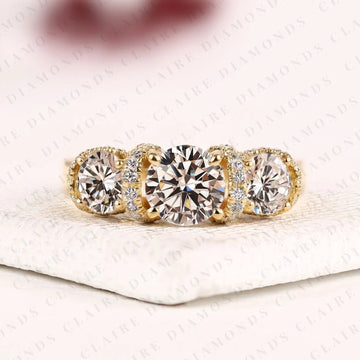 Round Cut Lab Grown Diamond Engagement Ring Three Stone Gold Ring with Diamond Accents Luxury Wedding Ring for Women
From $ 1,485.00
Shop Now
-
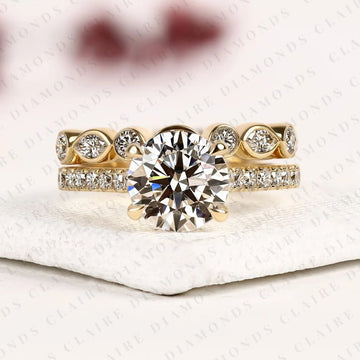 Round Cut Lab Grown Diamond Engagement Ring Set | Yellow Gold Bezel Accent Wedding Band | Modern Two-Tone Bridal Ring Set
From $ 1,549.00
Shop Now
-
 Oval Cut Lab Grown Diamond Engagement Ring Set | Yellow Gold Pavé Wedding Band | Two-Tone Bridal Ring Set
From $ 1,882.00
Shop Now
-
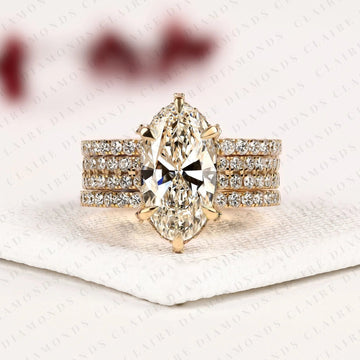 Oval Cut Lab Grown Diamond Hidden Halo Ring Multi Row Pave Gold Band Luxury Bridal Set Wedding Ring for Women
From $ 2,825.00
Shop Now
-
 Round Cut Lab Grown Diamond Eternity Wedding Band | Double Row Pave Diamond Wedding Ring | Yellow Gold Full Eternity Anniversary Band | Luxury Jewelry
From $ 1,774.00
Shop Now
-
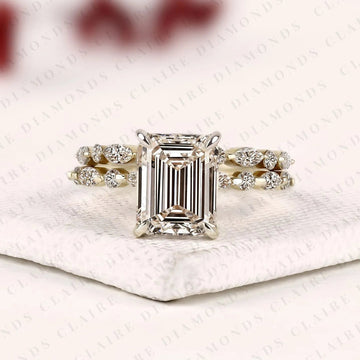 Emerald Cut Lab Grown Diamond Engagement Ring Bridal Set Ring with Pavé Diamond Band Modern Unique Bridal Jewelry
From $ 1,588.00
Shop Now
-
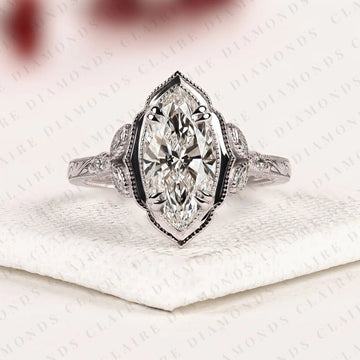 Marquise Cut Lab Grown Diamond Engagement Ring | Vintage Inspired Milgrain Bezel & Engraved White Gold Ring | Floral Diamond Accent Bridal Ring
From $ 1,407.00
Shop Now


